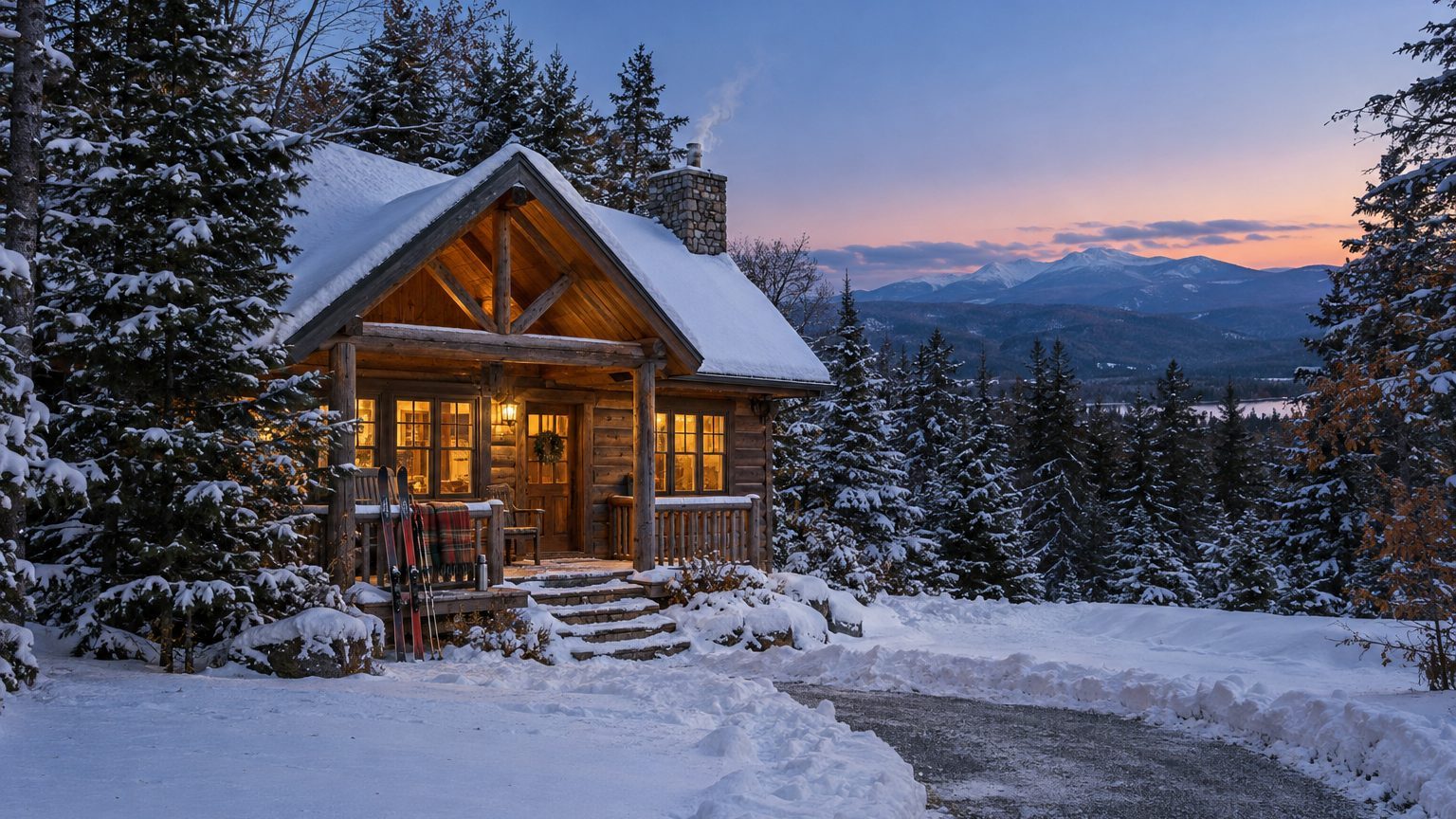
For the most dependable snow, book the Adirondacks (Lake Placid, Saranac Lake, Keene Valley, Wilmington near Whiteface). For a cozy village weekend with smaller ski hills, pick the Catskills (Windham, Hunter, Phoenicia, Woodstock). For deep lake-effect powder, head to Western New York and Ellicottville. For frozen waterfalls, wineries and walkable towns, choose the Finger Lakes or Hudson Valley. Aim for late December through February, and confirm a cabin’s heat source and winter road access before you pay a deposit.
Where is the best place to go in New York for a snowy winter weekend?
It depends on what you want the weekend to feel like. New York splits into four winter regions, and each rewards a different trip style.
| Region | Example base towns | Snow reliability | Main winter activities | Trip style it fits best | Cabin and lodging notes |
|---|---|---|---|---|---|
| Adirondacks | Lake Placid, Saranac Lake, Keene Valley, Wilmington | High (verify against NWS/NOAA data) | Downhill and cross-country skiing, snowshoeing, ice skating, sledding | Classic snowy weekend | Cabins are plentiful; confirm a plowed road or driveway |
| Catskills | Windham, Hunter, Tannersville, Phoenicia, Woodstock | Moderate-to-high (verify against NWS/NOAA data) | Skiing on smaller hills, snowmobiling, village cafes and galleries | Cozy village weekend | Cabins and village inns; mountain roads can be narrow and winding |
| Western NY/Tug Hill snowbelt | Ellicottville, Tug Hill communities | Variable: very heavy in lake-effect bands, local (verify against NWS/NOAA data) | Skiing at Holiday Valley (HoliMont is a private members’ club), snowmobiling, restaurants | Powder and dining | Ski-village lodging; road access can change fast in a snow band |
| Finger Lakes and Hudson Valley | Watkins Glen, Ithaca, Skaneateles, Saratoga Springs, Rhinebeck | Variable (verify against NWS/NOAA data) | Frozen waterfalls, wineries, cafes, walkable village strolls | Scenic slow weekend | Inns and village stays are common; check heat source if you book a cabin |
Match the column to your priority. The most dependable snow points to the Adirondacks. A cozy town with a ski day tacked on points to the Catskills. A ski day followed by a big dinner points to Ellicottville. Scenery without skiing points to the Finger Lakes or Hudson Valley.
The Adirondacks win on depth of activity. Whiteface has over 90 trails spanning 25 miles across three peaks, and its lift-served vertical is 3,166 feet, stretching to 3,430 when The Slides are open. The Catskills are smaller scale but huge in acreage: Catskill Park covers 700,000-plus acres, with designated snowmobile trails in some areas. Hunter and Tannersville sit less than 10 minutes apart, which makes a base-camp weekend easy.
Then there is the snowbelt. Tug Hill, east of Lake Ontario, averages more than 200 inches a winter. The hamlet of Hooker averaged 242.2 inches a season in the 1981-2010 period, according to the National Weather Service in Buffalo, and holds the state’s unofficial single-season record of 466.9 inches. If you were wondering about the snowiest places in New York, Hooker is a strong contender. But lake-effect bands are narrow. During one January 2016 event, the northern Tug Hill collected up to 3 feet while Highmarket, farther south, got less than half a foot.
The Finger Lakes and Hudson Valley play a different game. Snow shows up, but it is not the promise. What you get instead is Ithaca Falls, about 150 feet tall, and Taughannock Falls, about 20 minutes north of downtown Ithaca, both striking when frozen at the edges.
What are the best small towns in New York for a winter weekend?
Lake Placid is worth a winter visit mostly because of its history. It hosted the Winter Olympics in 1932 and 1980, and some of its Olympic venues stay open to the public for activities such as skating (check the ORDA schedule for the current season). Saranac Lake sits a short drive away and runs its Winter Carnival from February 5 to 14, 2027, with a “Wizards and Dragons” theme. The Ice Palace is built for the duration, weather permitting. That window overlaps Presidents’ Day weekend, so expect lodging in both villages to fill early.
The Catskills trade Olympic drama for cafes. Woodstock and Phoenicia lean artsy, Windham and Hunter lean slope-side, and the mountain roads between them, NY-214 near Hunter among them, are narrow and winding. Sullivan County, about two hours from Manhattan, adds quieter river towns: Callicoon is 20 minutes up the river from Narrowsburg. Pair a morning on the hill with an afternoon wandering galleries, and you have the cozy-village weekend without a long drive between the two.
Ellicottville is the snowbelt’s answer to a ski village. Holiday Valley is the main public ski area nearby (HoliMont is a private members’ club), and the village packs restaurants and bars into a few walkable blocks. Lake-effect snow here is generous but inconsistent from one day to the next, so watch the radar the week you travel.
Prefer a slower pace? Saratoga Springs, Skaneateles and Cooperstown are walkable towns where the main event is wandering, eating and warming up. Saratoga is the easiest to reach without a car, since Amtrak trains serve the city (confirm current schedules before you build a plan around them). Watkins Glen State Park and other gorge parks add ice-edged scenery, though some trails close in winter, so check with State Parks first.
Want more regional ideas? Our guide to Mid-Atlantic and Appalachian winter cabin getaways covers neighboring Mid-Atlantic and Appalachian options, and the broader winter weekend getaways hub compares states side by side.
How do you choose a winter cabin in New York?
Yes, you can rent a cabin in the Adirondacks in winter. Plenty of owners keep them open, and some sit minutes from the slopes (one well-known listing is a 7-minute drive from Whiteface and sleeps four). The question is whether a specific cabin works in January. Run through this checklist before paying anything:

- What is the primary heat source, and who refills it (propane, wood, electric)?
- Is the road or driveway plowed and maintained, and does the host expect 4WD or snow tires?
- Are the hot tub and fireplace actually usable in winter, and what are the rules?
- What are the minimum-night stays on holiday weekends?
- Are check-in instructions workable after dark, and is there an arrival cutoff?
Fireplaces and wood stoves deserve a direct question. Ask whether the owner supplies firewood and fire starters or expects you to bring your own. A hot tub in January should come with an answer about heating time and a safe path to it, since a snowy deck is slippery. Cabins and small inns book up early around MLK Day and Presidents’ Day weekends, so ask about minimum stays when you inquire rather than at checkout.
Cabin or town? Stay in the woods when your plan is quiet: snowshoeing from the door, a stove, no schedule. Stay in the village if you want dinner without a night drive on unlit roads, particularly in the Catskills where the mountain roads twist. Many travelers split the difference, with a cabin ten or fifteen minutes from a village center (one Hudson Valley rental, for instance, is a fifteen-minute drive from Stone Ridge).
A few safeguards apply to any rental. Book directly with the host if you want to avoid platform guest fees, verify the address on a map, read the contract before sending a deposit, and never wire money or pay with a prepaid or gift card. Calling the owner and asking for references is a fair request, and travel insurance is worth considering for a winter booking that a storm could derail.
When is the best time to visit New York for snow?
January and February usually have the most reliable snow, which also makes them the priciest. December can start strong in the snowbelt, because lake-effect snow is fueled by open water, and the lakes stay unfrozen early in winter. Lower-elevation areas like the Hudson Valley can be hit or miss before January, and the Catskills and Adirondacks depend on snowmaking until natural snow builds.
Elevation and lake position drive the odds, so a month-by-month read looks like this:
- December: Best odds in the Adirondacks and snowbelt; spotty in the Hudson Valley and Finger Lakes.
- January: Reliable across the Adirondacks and Catskills; snowbelt bands active unless lakes freeze.
- February: Peak of the season, with Presidents’ Day weekend and the Saranac Lake Winter Carnival drawing crowds.
- March: Higher elevations hold snow; valleys thaw.
March is the sleeper month. Higher elevations can still deliver, rates tend to soften, and it is maple sugaring season. The New York State Maple Producers Association organizes Maple Weekends in March, with sugarhouses open to visitors, so check its site for dates before you book.
Before you drive, run a four-step routine. Pull the National Weather Service forecast for the specific county you are entering, since conditions can differ sharply between neighboring ones. Check 511NY for road conditions and travel advisories, which can include restrictions on certain vehicles during storms. Read the resort’s snow report. Then confirm your lodging’s arrival cutoff, because a cabin check-in after dark on a snowy road is a common winter mistake. Plan your car needs by region: the Adirondacks and snowbelt are drive-everywhere places, the Catskills need a car for the hills, and Saratoga Springs or Ithaca work best on foot once you arrive. For regional departures, see our Winter Weekend Getaways From NYC page.
Frequently Asked Questions
Do you need a 4WD or snow tires to drive in the Adirondacks in winter?
Not by general rule, but good winter tires or 4WD make a real difference on hills and unplowed driveways. Ask your host what the access road requires. Check 511NY before leaving, since advisories can change quickly.
Can you visit New York’s winter towns without a car?
Partly. Saratoga Springs is served by Amtrak and is walkable once you arrive, but no mountain destination is truly car-free. Whiteface sits outside the village of Lake Placid, and the Catskill ski areas are spread along winding roads. Confirm current transit options directly.
Is Niagara Falls worth visiting in winter?
Yes, if you want ice-draped views and smaller crowds. Niagara Falls State Park is open year-round for viewing the falls, though some viewing areas close due to ice, and seasonal attractions like Maid of the Mist stop running. Confirm Cave of the Winds winter operations with State Parks, since the winter experience is modified.
Does it snow enough in the Finger Lakes for a winter getaway?
Snow is variable, so treat this as a scenery trip rather than a snow guarantee. Frozen waterfalls near Ithaca and Watkins Glen, wineries and walkable towns work even in thin snow years. Check the NWS forecast first if snow matters to you.
Are New York cabins with hot tubs usable in January?
Usually, but ask before you book. Confirm that the tub is heated and cleared of snow, that there is a safe path to it, and whether the host has winter rules. A tub that sits unused for days may take a while to heat.
Sources: cntraveler.com | passportinphotos.com | momendeavors.com