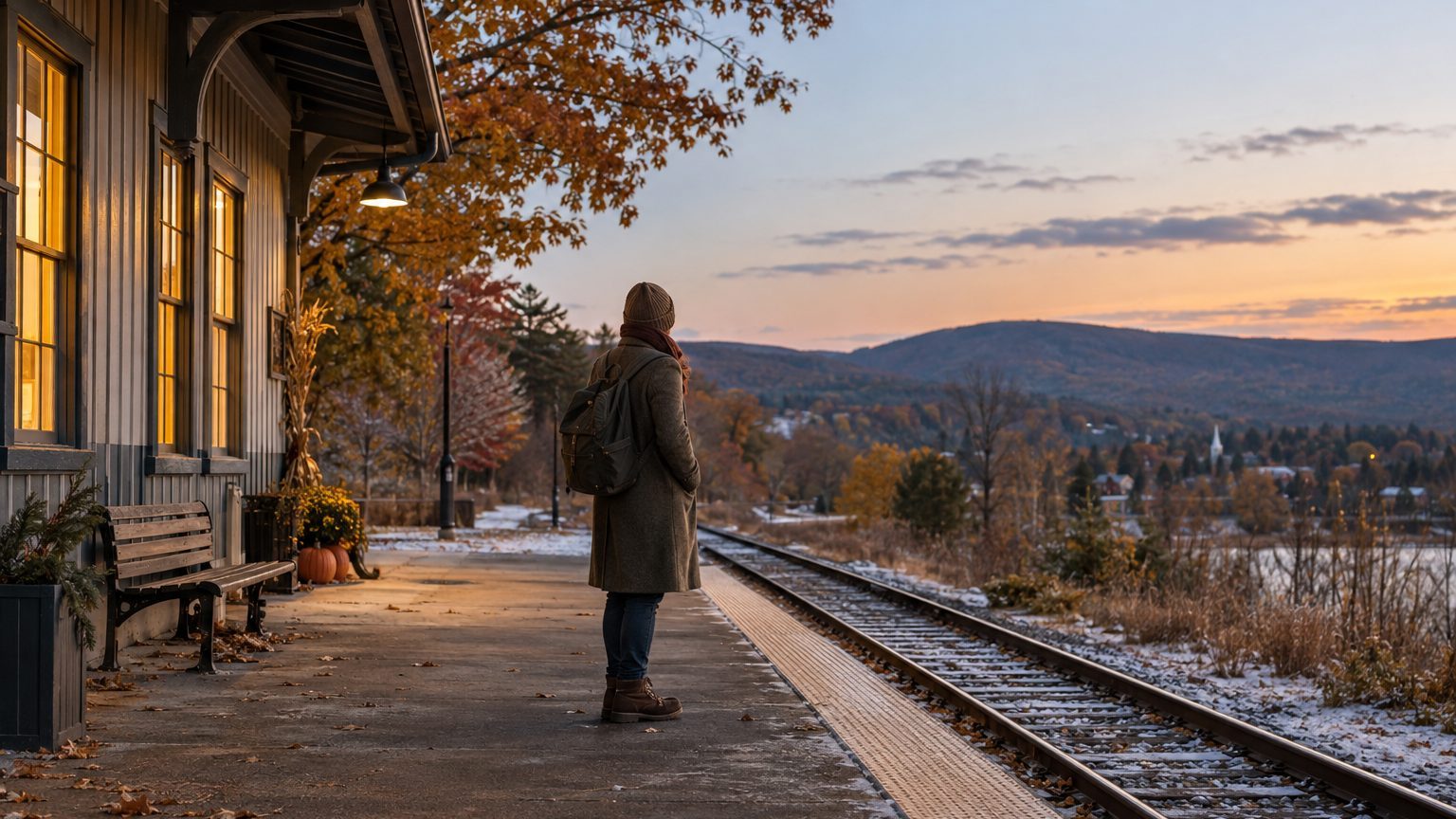
Two hours and fifteen minutes. That’s the Amtrak ride from Moynihan Train Hall to Hudson, a Hudson Valley town with a walkable downtown just minutes from the station. Arrive Friday evening and you can be eating dinner in a different world by 8 p.m. For Winter Weekend Getaways From NYC, that math is the whole appeal.
Start with the clock, not the postcard
Most New Yorkers pick a destination first and discover the commute later. Reverse it. A three-hour ceiling for each leg keeps a two-night trip from becoming a transit marathon, and in winter, when daylight ends before 5 p.m., every hour on the road is an hour you don’t spend by a fire.
The rail map helps. Philadelphia sits about 90 minutes away by Amtrak, so it works for a last-minute Saturday-to-Sunday trip when museums and long lunches beat snowshoes. Hudson is a bit over two hours. Saratoga Springs takes roughly four hours by train, with a short cab ride from the station into town, which makes it a better fit for a Friday night departure than a Saturday morning one.
Metro-North reaches further than people expect.
The Harlem Line runs to Wassaic, the end of the line, and one Hudson Valley inn is only about five minutes from that station and sends a pickup. Beacon, on the Hudson Line, is around 90 minutes from the city. A free local loop shuttle connects its station with Main Street Monday through Saturday, so a car adds nothing there. Tarrytown is closer still, roughly 30 minutes north of Manhattan, if you want a getaway that barely counts as leaving.
Where the snow actually is
If you want a real winter, go to the Catskills. Hunter Mountain is about two and a half hours from the city by bus. Belleayre has 62 trails and a 3,429-foot summit, and Windham is often called the “gem of the Catskills.” Bus operator OurBus added winter routes from New York City to Windham, Hunter, Belleayre and Pennsylvania’s Camelback Mountain in January 2026, which removes the old excuse of not owning a car.
Beginners have a gentler option closer in. Thunder Ridge Ski Area in Patterson is about 70 miles north of Manhattan, with 22 trails, three chairlifts and four magic carpets. Take Metro-North’s Harlem Line to Patterson station, then a shuttle to the slopes. The trip runs about 90 minutes with one required transfer, and in some seasons the ski area has offered a discounted train-plus-lift-ticket combo.
Don’t count on snow in early winter, though.
Last winter showed how much conditions swing. A late-February nor’easter dropped a foot or more on ski areas near the metro region and six to eight inches across the Catskills and Berkshires. Local forecasters expected Hunter and Belleayre to stay open well into April. A mild December can look very different, so check snow reports a few days out, and treat January through February as the dependable window.
Not a skier? Lake Placid hosted the Winter Olympics in 1932 and 1980, and Mirror Lake is open for skating and tobogganing. The Olympic complex and museum there give you something to do when your legs give out. Amtrak’s Adirondack line stops at Westport, where a shuttle covers the last stretch, though the full trip is a long one and fits a three-night stay better than two.
When the forecast says rain
Winter getaways don’t have to involve snow. A weekend in Philadelphia is built for indoor days, and so are Hudson’s galleries and restaurants. Beacon pairs a walkable Main Street with a big contemporary art museum, Dia:Beacon, which is a good use of a gray Saturday.
Holiday trains add another reason to go before the new year. The Catskill Mountain Railroad runs its Polar Express trips out of Kingston from November 13 through December 30, with adult fares listed at $48 off peak and $58 at peak, and child fares at $38 and $48. Kingston itself pairs well with a night in the Hudson Valley. It’s the sort of trip that works better with kids than with a partner who hates crowds.
Mystic, Connecticut, is the quiet pick. Amtrak is the only train service that stops there, and it is a good off-season town because the crowds that choke it in July are gone. A seaside walk in a wool coat, then chowder, is a different kind of winter weekend, and a perfectly good one.
Practical details that save a weekend
Book lodging first, then transport. Small inns near train stations fill fast on January and February Fridays, and a room near the station is worth more than a pretty one 30 minutes away by taxi. Many upstate stations have limited rideshare, so confirm pickup or a taxi number before you board.
Watch the calendar for fare breaks. In 2025, the MTA ran a “Winter Weekend” program that cut Long Island Rail Road and Metro-North weekend fares to $1 for family and friends traveling with monthly ticket holders, through the end of March. If you have a commuter friend, ask whether the program is running this season before you buy tickets.
One trap is worth knowing about. The Berkshire Flyer, Amtrak’s direct train from New York to Pittsfield, Massachusetts, is a summer-only service, so it won’t get you to the Berkshires in January. Winter Berkshires trips mean driving, or a rail-plus-transfer plan that takes longer than the Flyer’s roughly four hours. If the mountains of western Massachusetts are your goal, a car or a ride-share from Hudson may be the realistic route.
Pack for the destination, not for the city. Waterproof boots matter more than a second sweater, and a thermos will save you money on any platform. A small daypack beats a roller bag on icy sidewalks.
Last: leave Sunday evening slack. Winter storms stall trains and buses, and the nor’easters that make a ski weekend great are the same ones that turn a 7 p.m. return into a midnight one. Take an earlier train home if the forecast shows snow arriving late on Sunday, and the extra hour in the city will cost you less than a night in a station.
Sources : smartflyer.com | inhabit.corcoran.com