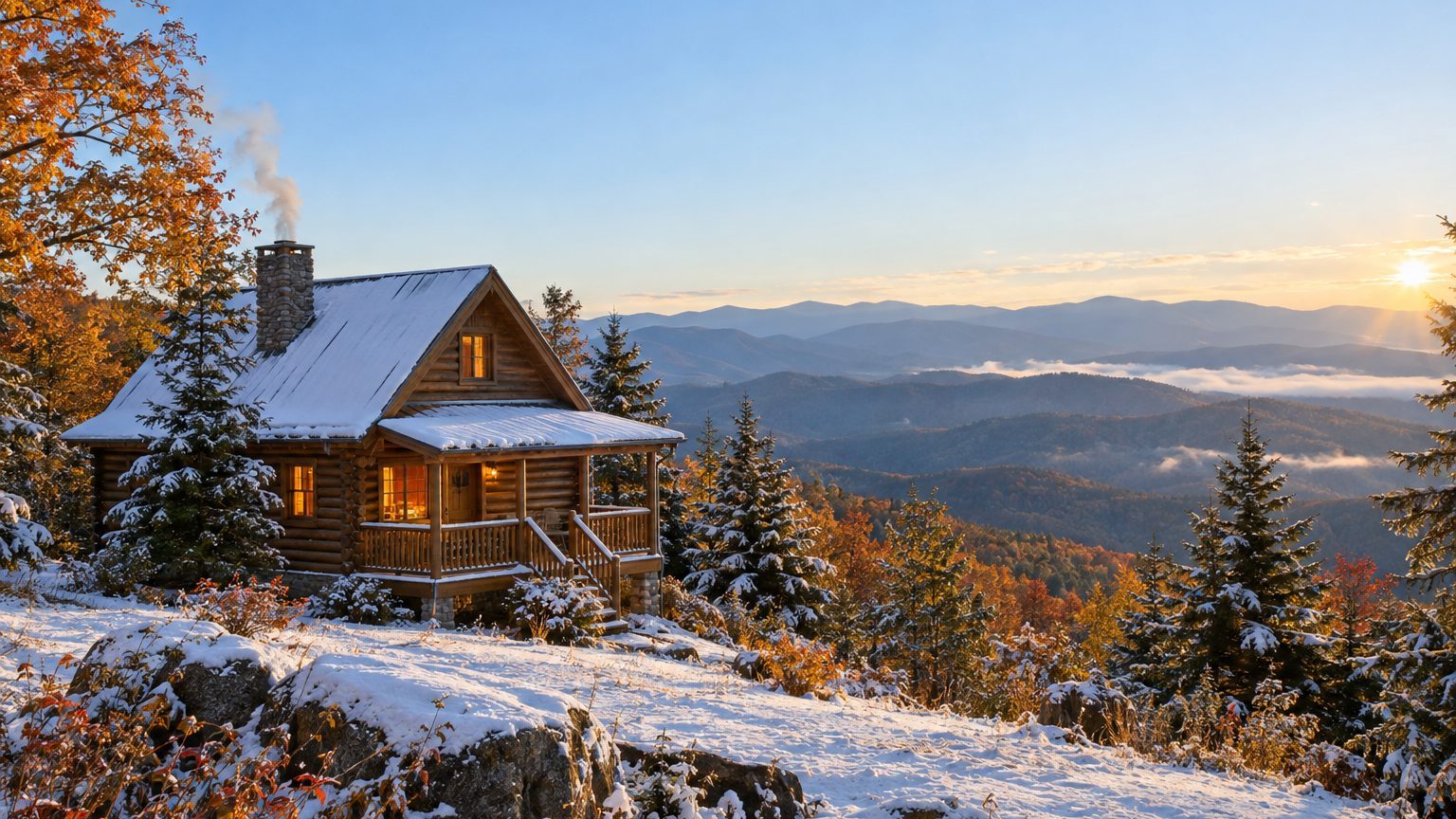
Base yourself in the Shenandoah Valley (Luray, Front Royal, Staunton) or the Blue Ridge foothills (Wintergreen, Nelson County) for cabins, mountain views and a fair chance of snow. Highland County, Hot Springs and the Mount Rogers area in Southwest Virginia give the most reliable snow. Everywhere else, plan a weekend that works without it: cabin time, winter hikes, caverns, small-town dinners, wineries and breweries. Skyline Drive and the Blue Ridge Parkway both close routinely for ice, so check National Park Service (NPS) alerts and Virginia 511, the state’s traveler information service run by VDOT, before you leave.
Where does it actually snow in Virginia in winter?
Virginia’s climate splits along a west-to-east elevation gradient. By NOAA’s 1991-2020 normals, Burkes Garden averages 46.9 inches a year, Hot Springs 25.3, Blacksburg 24.7, Harrisonburg 19.4, Charlottesville 17 and Richmond 8.8. Virginia Beach averages about 3.4 inches. Snow is most common from December through March, and January and February are typically the snowiest months.
That gradient gives you four tiers:
- Highlands (Highland County, Hot Springs, Mount Rogers, Grayson Highlands): high odds. This is the only tier where you can book a snow trip.
- Shenandoah Valley and Blue Ridge: moderate. The valley averages roughly 19 to 23 inches, usually in a few storms that melt within days. Ridgelines run colder than the valley floor.
- Piedmont (Charlottesville, Richmond): low to moderate. Treat snow as a bonus on a cabin or winery weekend.
- Coast (Williamsburg, Eastern Shore, Hampton Roads): low. Plan a cold-weather trip.
What are the best towns and cabin areas for a winter weekend in Virginia?
| Base area | Snow likelihood | Best winter activities | Typical lodging | Road or closure risk |
|---|---|---|---|---|
| Luray / Front Royal | Moderate | Valley and boundary hikes, Luray Caverns, distilleries | Cabins, inns | Skyline Drive closures; Thornton Gap (US-211) and Front Royal entrances |
| Charlottesville / Wintergreen | Moderate (higher on the ridge) | Skiing, snow tubing, wineries and breweries | Resort condos, cabins, hot tub rentals | Steep mountain access roads; Blue Ridge Parkway closures |
| Staunton / Lexington / Hot Springs / Highland County | Moderate to high | Historic downtowns, The Omni Homestead skiing, maple sugar camps | Historic inns, resort, cabins | Rural back roads; ice on mountain passes |
| Abingdon / Floyd / Mount Rogers | High at elevation | Winter hiking and snowshoeing at Grayson Highlands, small-town music and dining | Cabin rentals, inns, yurts | Park access roads after storms; no state park cabins at Grayson Highlands |
| Williamsburg / Eastern Shore | Low | Colonial Williamsburg, beach walks, Chincoteague | Hotels, inns, cottages | Coastal wind and ice; check attraction hours |
Luray and Front Royal put you at the foot of Shenandoah National Park, and Luray Caverns sits about ninety minutes southwest of Washington, D.C. The caverns are open every day of the year, with winter hours of 9 a.m. to 4 p.m. on weekdays and 9 a.m. to 5 p.m. on weekends. Snow day: hike from park-boundary trailheads, since visitors can still enter on foot when Skyline Drive is closed. No-snow day: caverns in the morning, then a distillery or brewery tasting.
At Wintergreen, snowmaking covers the entire trail network, and it has the state’s largest tubing park. Projected 2026-27 opening dates run from December 4 at Wintergreen to December 19 at The Omni Homestead, with Bryce on December 9 and Massanutten on December 12. Projected closings fall between March 7 and March 21. Without snow, Charlottesville and Nelson County wineries and breweries carry the weekend.
Staunton and Lexington are walkable historic towns that work in any weather. Hot Springs adds The Omni Homestead’s slopes, and Highland County’s maple season runs from mid-January through the end of March, with the Maple Festival on March 13-14 and 20-21, 2027. Snow day: slopes or a country-road drive. No-snow day: downtown dining and a sugar camp tour.
Abingdon and Floyd handle the dining and music side, while Grayson Highlands State Park handles the snow. The park has camping, a bunkhouse and yurts but no cabins, and its campgrounds are closed in winter, so lodging in Damascus or Independence is the fallback. Microspikes or snowshoes may help depending on trail conditions.
Williamsburg and the Eastern Shore are low-snow, cold-weather trips built on indoor and coastal outings. Kiptopeke State Park offers winter beach walks.
What closes in winter, and how do you plan around road conditions?
Skyline Drive is 105 miles with four entrances: Front Royal, Thornton Gap (US-211), Swift Run Gap (US-33) and Rockfish Gap. It stays open unless snow or ice closes it, and crews can need several days to reopen it after a storm. Sections can close separately. In 2026, lodges, waysides and campgrounds in the park are all closed by November 29, so you sleep and eat in the gateway towns.
The Blue Ridge Parkway is harsher. The roadway is not maintained in winter, and high-elevation and tunnel sections are often closed from late fall through early spring. In January 2026, NPS closed the entire route ahead of a winter storm.
The day before you travel, run through this list:
- NPS Shenandoah road status and alerts for Skyline Drive.
- NPS Blue Ridge Parkway road status page for segment closures.
- Virginia 511 (VDOT) for plowing, traction advisories and incidents on the highways and back roads to your cabin.
- Virginia State Parks website for park alerts, cabin check-in details and Grayson Highlands conditions.
- Your host: ask about driveway grade, plowing and whether snow-rated tires or four-wheel drive are advised. Mountain driveways can be steep and icy even when the main road is clear.
Pack traction devices for boots, a shovel, an ice scraper, water, snacks and a phone charger. Cell service can be unreliable in the highlands, so download offline maps before you go.
When is the best time to go for snow, and how far ahead should you book?
Late January and February give the best odds of snow, and they are also when ski resorts are most likely to be running. Early December is a gamble, since resorts open on projected dates that depend on cold nights for snowmaking. Holiday weeks book earliest and cost the most, so a mid-January weekend, or a Tuesday-to-Thursday stay in February, usually costs less and has more cabins to choose from.
Virginia State Parks has more than 300 climate-controlled cabins, many open year-round, and all but a few have fireplaces. Some listed two-bedroom cabins run $110 to $123 plus tax per night in the off-season. When weather or storm damage closes a park, reservations are honored and carried over. Pets cost $20 plus tax per night.
With private rentals and resort condos, read the cancellation terms before paying a deposit, and look for free cancellation up to a few days out and a clear weather policy. If you want snow, keep free cancellation until a few days out so you can watch the forecast, and keep a no-snow plan from the table above ready. For comparing Virginia with other states, see winter weekend getaways and the New York, Pennsylvania, Virginia and Tennessee winter getaways guide.
Frequently Asked Questions
Does Virginia have ski resorts?
Yes, four: Wintergreen, Massanutten, Bryce and The Omni Homestead. Wintergreen and Massanutten have the largest trail selections, while Bryce and The Omni Homestead are smaller.
Is Skyline Drive open in the winter?
Usually, but it can close at any time for snow or ice. The park itself stays open, so you can still hike in from the entrances.
Are Virginia state park cabins open in winter?
Many are, though some parks keep only part of their cabins open in the off-season. Grayson Highlands has no cabins at all, so check the specific park before you book.
Is the Virginia coast worth visiting in winter?
Yes, if you want quiet beaches and cold-weather walks rather than snow. Confirm hours for Colonial Williamsburg attractions and Chincoteague businesses, because winter schedules are shorter.
Sources: dcr.virginia.gov | nps.gov | dcr.virginia.gov