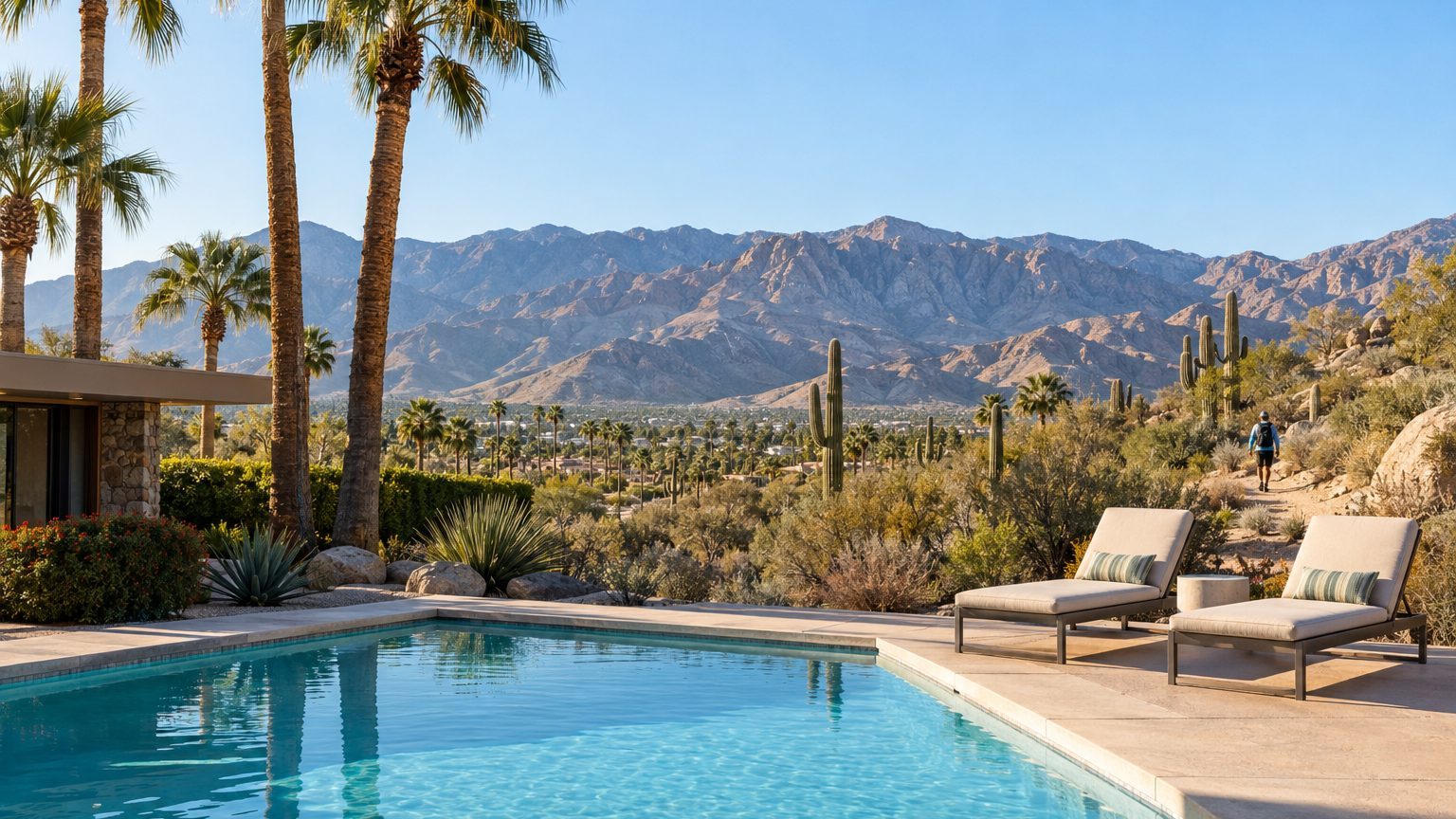
For warm days, book Palm Springs, Phoenix/Scottsdale or Tucson. Daytime highs there usually reach the 60s to low 70s °F from December through February. Joshua Tree, Sedona and White Sands give you bigger desert scenery, but mornings are chilly and nights sit near or below freezing. Santa Fe and Taos are sunny and genuinely cold, with regular snow, so pick them for adobe streets and winter light rather than pool days.
Which Southwest destinations are actually warm in winter?
Palm Springs typically sees January highs near 70°F and lows near 47°F. During the cooler months, the Coachella Valley is among the warmest places in the Southwest. Joshua Tree National Park is about a 45-minute drive from Palm Springs and 2 hours due east of Los Angeles, but it sits higher, and many of its winter days top out around 60°F. San Diego is the mildest at night and cooler than Palm Springs at midday, and it is often cloudier than the inland desert.
Phoenix winter days run in the 60s or 70s, and Visit Phoenix reports that temperatures rarely drop below freezing there. Scottsdale shares that basin. Tucson runs a degree or two cooler by day and several degrees cooler at night, and Saguaro National Park averages winter temperatures in the high 60s. So is Arizona or California warmer? Palm Springs edges Phoenix by a couple of degrees in January, and both beat Tucson at night.
New Mexico trades warmth for sun. Albuquerque, Santa Fe and Taos have crisp, bright days and hard freezes at night. Only the south, around Las Cruces and White Sands National Park in the Chihuahuan Desert, runs about 15 degrees warmer than Santa Fe.
What is the weather like in the Southwest from December to March?
Desert air is dry and clear, so the ground sheds its heat quickly after sunset. Most stops in the table below swing 20 degrees or more between afternoon and dawn. A 68°F Phoenix afternoon becomes a mid-40s night, and a 60°F Joshua Tree afternoon drops into the 30s.
Elevation explains why two towns a short drive apart feel like different seasons. Air cools roughly 3.5°F for every 1,000 feet you climb. Sedona sits two hours north of Phoenix Sky Harbor International Airport and about 3,250 feet higher than Phoenix, which is why its January highs run about 10 degrees lower. Flagstaff, about two hours and 20 minutes’ drive north of Phoenix, has winter temperatures usually in the teens to 40s.
| Weekend base | Typical January high / low (°F) | Elevation | Nearest major airport | Best for | Main winter caveat |
|---|---|---|---|---|---|
| Palm Springs | 70 / 47 | about 480 ft | Palm Springs International | Pool and resort | Crowds and higher rates in February |
| San Diego | 66 / 50 | near sea level | San Diego International | Coast and city breaks | Cooler and often cloudier than the desert |
| Joshua Tree area | 60 / 37 | about 2,700 ft | Palm Springs International | Hiking and rock scenery | Near-freezing nights |
| Phoenix / Scottsdale | 68 / 46 | about 1,100 ft | Phoenix Sky Harbor International | Pool and resort, golf | Event weeks fill hotels |
| Tucson | 67 / 41 | about 2,500 ft | Tucson International | Hiking, Saguaro National Park | Chilly nights |
| Sedona | 58 / 34 | about 4,350 ft | Phoenix Sky Harbor International | Hiking and red rock views | Freezing nights, occasional light snow |
| Santa Fe | 44 / 17 | about 7,200 ft | Albuquerque International Sunport | Art, adobe, snow plus sun | Regular snow and hard cold |
| Taos | 42 / 12 | about 7,000 ft | Albuquerque International Sunport | Snow plus sun | Coldest base on the list |
| Albuquerque | 48 / 26 | about 5,300 ft | Albuquerque International Sunport | Art, food and a flexible base | Cold nights, light snow |
| White Sands / Las Cruces | 59 / 29 | about 3,900 ft | El Paso International | Dunes and sunset hikes | Sub-freezing mornings, missile-test closures |
Source: NOAA U.S. Climate Normals, 1991 to 2020, rounded to the nearest degree. The nearest weather station can differ slightly from the town center, and elevations are approximate.
Snow follows elevation, not state lines. Sedona averages roughly 4 to 6 inches a year, usually a dusting that melts by afternoon. Flagstaff averages roughly 65 to 110 inches a year, depending on the station. Santa Fe gets about 22 inches a year, and Taos averages 6 inches in January alone. Palm Springs and the Phoenix valley floor almost never see it.
How do you choose the right Southwest weekend for your trip?
A winter weekend works best when the trip leaves at least two full days on the ground. Sedona’s two-hour drive from Phoenix, for instance, suits a Friday-morning flight better than a Friday-night one. Match the destination to the trip style first.
If you want pool weather and resort time, pick Palm Springs or Scottsdale. Afternoons near 70°F make sun loungers comfortable, but the same pool deck is jacket weather once the sun drops behind the mountains.
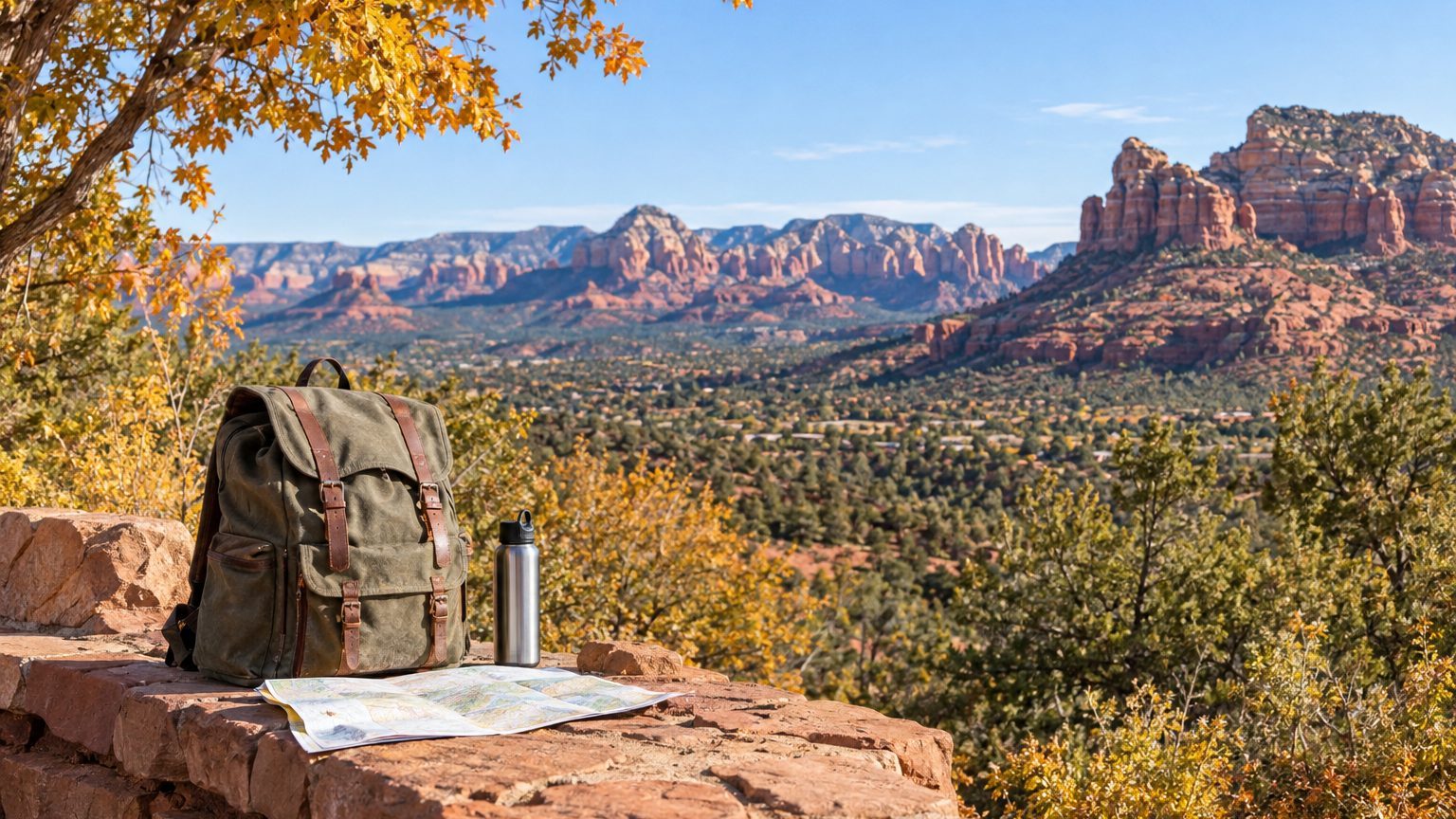
If you want hiking and national parks, the choice is between Joshua Tree, Tucson and Sedona. Joshua Tree charges $30 per vehicle for seven days and does not require a timed-entry reservation in 2026. Tucson pairs Saguaro National Park with some of the mildest hiking temperatures in Arizona. Sedona gives you red-rock trails with mornings that call for a hat. White Sands opens its gate at 7 a.m. and closes about 30 minutes after sunset in winter. Missile tests on the neighboring range can close Dunes Drive for up to three hours, and sometimes US-70 too, so call the park the day before.
If you want art, adobe towns and a mix of sun and snow, go to Santa Fe, Taos or Albuquerque. Albuquerque is the warmest and the easiest to reach by air. Santa Fe packs galleries and museums into a walkable plaza, and Ski Santa Fe sits about 16 miles northeast of downtown with a base near 10,350 feet. Taos Ski Valley’s base is at 9,200 feet. Travelers who would rather lean into the snow have our winter weekend getaways by state guide, the cabin picks in Mid-Atlantic and Appalachian winter getaways, and the lake towns in Midwest winter getaways.
What should you pack for a desert winter weekend?
Pack for the 20-degree swing, not the afternoon high. A desert weekend in January asks for three thin layers rather than one thick coat, because you will shed and add them several times a day.
- A moisture-wicking base layer, short or long sleeve, for the warm part of the day.
- A fleece or light insulated jacket for mornings, evenings and sunset hikes.
- A windproof shell, since desert wind makes a 50°F afternoon feel colder.
- A warm hat and light gloves for dawn at Joshua Tree, Sedona or White Sands, where lows sit near or below freezing.
- Sunglasses and sunscreen, because winter sun is strong and white gypsum sand at White Sands reflects it.
- Closed-toe shoes with grip for rocky trails, plus long pants, which also protect against cactus spines.
- More water than seems necessary, even when it is cool.
For Santa Fe and Taos, add insulated boots and a proper winter coat.
When should you book a Southwest winter weekend, and what does it cost?
Hotel prices follow the calendar more than the weather. Cabins and small inns book up early around MLK Day and Presidents’ Day weekends. Rate levels change by property and week, so compare dates on the booking sites directly. For 2026 and 2027, these are the windows to flag:
- December 24 to January 2: the holiday stretch, busy everywhere warm.
- January 16 to 18, 2027: MLK Day weekend.
- February 8 to 14: the WM Phoenix Open at TPC Scottsdale, with tournament rounds February 11 to 14.
- February 11 to 21: Modernism Week in Palm Springs, which overlaps Valentine’s Day and Presidents’ Day in its opening stretch.
- February 13 to 15: Presidents’ Day weekend, with the holiday on Monday, February 15.
- February 19 to March 23: Cactus League spring training around Phoenix. Opening Day for the regular season follows on March 25.
Cheaper weekends tend to sit between those peaks. Early December, the first weeks of January after the holiday, and late January ahead of the February pile-up usually offer more room. Sunday-to-Thursday stays also avoid the weekend premium. Refundable rates matter in the high desert, where a storm can close roads. Before you leave, check AZ511 for Arizona roads, Caltrans QuickMap for California and NMRoads for New Mexico. The National Park Service pages for Joshua Tree, Saguaro, White Sands and Petrified Forest list current hours, fees and alerts.
Frequently Asked Questions
Is Palm Springs or Scottsdale better for a winter weekend?
Palm Springs is a couple of degrees warmer, and it suits a resort-and-design weekend. Scottsdale is the better base if you want golf, restaurants and Cactus League games. Both get busy in February, so check the event dates above before you book.
Is Joshua Tree too cold in winter?
Not by day, when afternoons typically sit around 60°F. Nights are the problem, sitting in the 30s, so bring a hat, gloves and a fleece for sunrise and stargazing.
Is Sedona worth visiting in winter?
Yes, if you like hiking in cool, clear air. Daytime highs run in the 50s and 60s, trails are quieter than in spring, and light snow usually melts by afternoon. Mornings are cold, so start hikes late and dress in layers.
Can you see snow and desert on the same weekend in the Southwest?
Yes. Flagstaff’s snow is a two hour and 20 minute drive north of Phoenix, and Santa Fe’s snow sits a short drive from Albuquerque’s high desert. Check AZ511 or NMRoads before you drive, because snow can slow mountain roads even when the desert below is dry.
Sources: whimsysoul.com | livelikeitstheweekend.com | bemytravelmuse.com