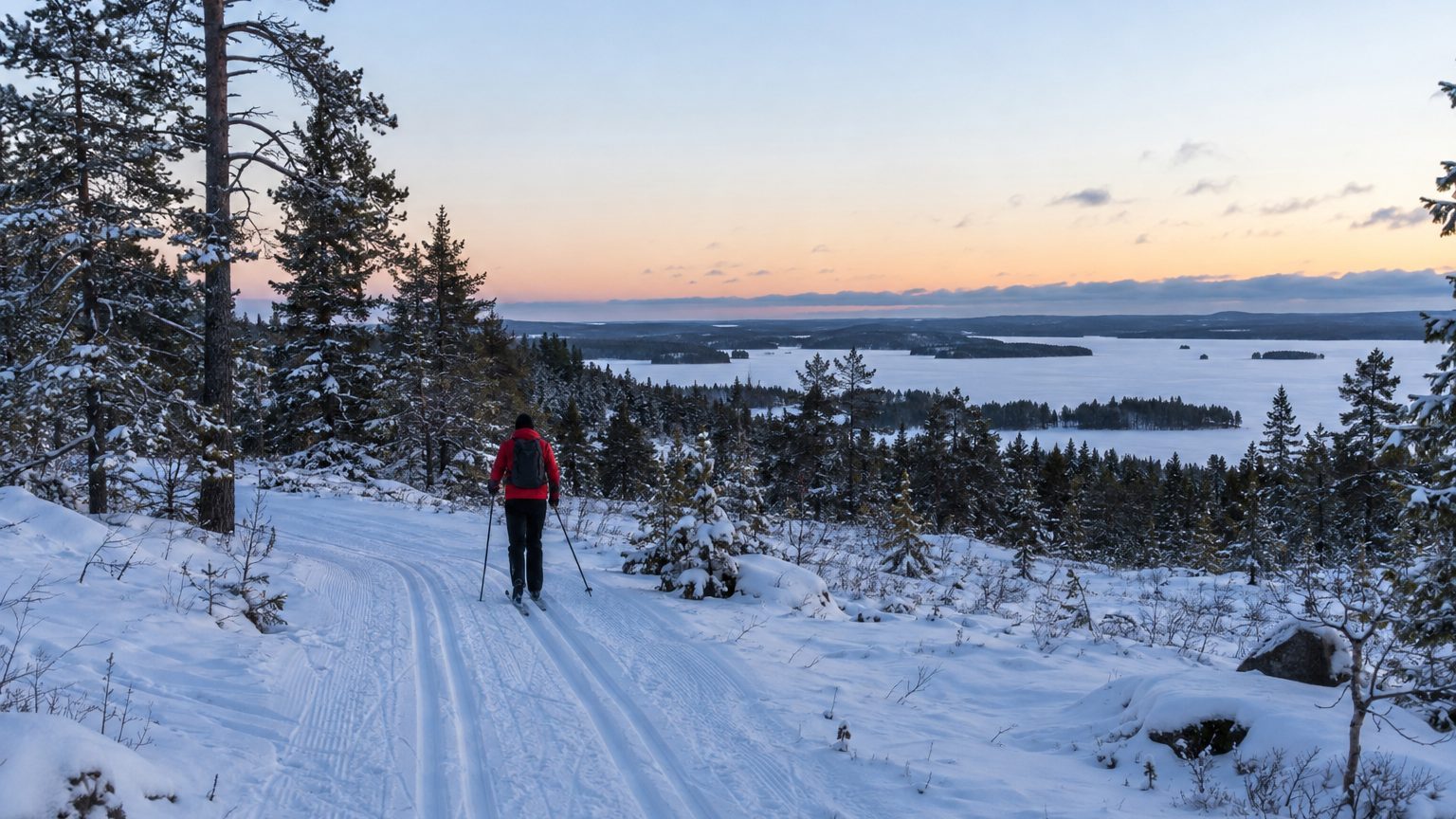
The Keweenaw Peninsula averages around 300 inches of snow a year, roughly 25 feet. That one number explains why Winter Getaways in Michigan work so well: the state treats the season as a feature, not a nuisance.
Still, “Michigan in winter” can mean very different trips.
You can ski a resort hill on Friday and sit in a brewery by Friday night. You can snowshoe a frozen Lake Michigan dune, or skip the outdoors entirely and spend a weekend wandering a Bavarian-style town. The right choice depends on how much snow you want and how far north you’re willing to drive.
- The Keweenaw Peninsula averages about 300 inches of snow a year.
- Marquette hosts the UP200 sled dog race between Marquette and Grand Marais.
- Boyne Mountain Resort has 60 downhill trails and 12 lifts.
- Michigan’s state parks stay open in winter, with 103 parks in total.
The Upper Peninsula and the far north: where snow is guaranteed
Anyone who wants reliable powder should look at the Keweenaw. Its snow totals are why visitors compare it to Finland, and I think the comparison holds up: long white days, quiet roads, and a population that regards a foot of overnight snow as a Tuesday.
Marquette is the more accessible base. It suits people who like their winter active, with ice climbing near town, winter hiking and a famous sled dog race, the UP200, that runs between Marquette and Grand Marais. Even if you don’t plan to ski, standing at a trailhead while dog teams pass is hard to forget.
The state’s Department of Natural Resources also points winter visitors to Palms Book State Park, home of Kitchi-iti-Kipi, the big spring. It’s a short outing, and a good one when you’ve been driving for hours.
Pack more layers than you think you need.
Slopes, dunes and lakeshore towns in the northwest
If the Upper Peninsula is a long drive, northern Lower Michigan is the compromise. Boyne Mountain Resort has 60 downhill trails and 12 lifts, with ski-in, ski-out lodging and more than 35 kilometers of groomed cross-country trails. Boyne Highlands near Harbor Springs adds roughly 55 runs, fat-tire snow biking, an ice rink and winter horseback rides.
Sleeping Bear Dunes National Lakeshore is the surprise of the season. Summer crowds pack the Dune Climb near Glen Arbor, but winter turns the same slope into one of the state’s steepest sledding hills. Snowshoeing to the top rewards you with views of a frozen Lake Michigan.
Traverse City makes a sensible base for all of it. Wineries, restaurants and hotels are a short drive from the lakeshore, and Petoskey and Harbor Springs offer a quieter, small-town alternative with a lot of character. Winter rates at northern lodging often run below summer prices.
Skip the weekends if you can.
Cozy towns, cities and a luge track
Not every winter trip needs a lift ticket. Frankenmuth, nicknamed Little Bavaria, stays festive all season, with indoor attractions, big family-style dinners and shops that make a snowy afternoon easy to fill. Grand Rapids works as a city break, with museums, breweries and plenty of indoor options when the forecast turns bad.
Southwest Michigan trades crowds for calm. Saugatuck and Holland slow down in winter, and Harbor Country around New Buffalo has become a popular choice for couples who want a fireplace, a winery tasting room and a walk along a frozen shoreline. Bed-and-breakfasts in the area often build weekends around exactly that.
Then there’s the odd one out. The Muskegon Luge Adventure Sports Park is a state-managed winter complex where you can ride a luge, snowshoe or ski, all in one afternoon. Few places in the Midwest offer that.
Snowmobilers, meanwhile, have more than 6,500 groomed trails across the state to choose from. Around Cadillac, the Huron-Manistee National Forest alone holds over 200 miles of groomed trail.
What to sort out before you go
Michigan’s state parks stay open in winter, and many are better for it. The state operates 103 of them, with trails groomed for cross-country skiing, snowshoeing, ice fishing, fat-tire biking and winter camping. To park at one, you need a Recreation Passport.
Residents buy it when they renew their license plates, and the annual price rose to $15 on January 1, 2026. Buying at the park gate costs $5 more. Out-of-state vehicles pay the nonresident rate, which runs roughly $11 for a day or about $40 for a year, so confirm the current price at the entrance or on the DNR website before you drive up.
December through February is the dependable snow window. Early December can still bring bare ground in the southern half of the state, and the lake-effect belts near Lake Michigan and Lake Superior hold snow longest. Check road and trail conditions before you leave, since a lake-effect band can drop a foot of snow on one town and leave the next one dry.
One last detail for anyone who wants to stay out overnight: Sleepy Hollow State Park near Lansing keeps its 181 campsites open through winter, along with 13 miles of trail shared by horse riders and dogsledders.
Sources : heymichigan.com | mymichiganbeach.com