California packs three winters into one state. Snow settles into the mountains, the desert becomes comfortably warm, and coastal towns turn dramatic and quiet. Every list of Winter Vacation Ideas in California comes down to choosing which of those three you want.
A ski weekend and a desert weekend have almost nothing in common.
Snow country, three ways
Lake Tahoe is the headliner. Snow turns the lake into an alpine destination built around skiing, snowshoeing and slow evenings indoors. Mammoth Lakes is its southern rival, and it delivers the state’s most consistent deep-winter conditions, with reliable snowfall and a town built around winter travel. Both repay a stay of four or five nights better than a quick overnight.
Big Bear is the shortcut. It sits in the San Bernardino Mountains near Los Angeles, and it is Southern California’s most accessible snow destination, with reliable conditions but less intensity than Tahoe, which suits families and first-time skiers.
Mount Shasta is the sleeper pick. It sits along I-5 about an hour north of Redding, which makes for a much less harrowing drive when winter weather strikes. Snowshoeing trails, cross-country skiing, sledding and tubing are all on offer. It draws a fraction of the traffic that Tahoe does, and that is half the appeal.
Then there is the oddest snow trip in the state. In Palm Springs, an aerial tramway takes you to the top of San Jacinto Mountain, where it snows every winter. You can eat breakfast poolside and be standing in snow by lunch. Bring a real coat.
Pack chains, and check road conditions before every mountain drive.
The desert, when everywhere else is cold
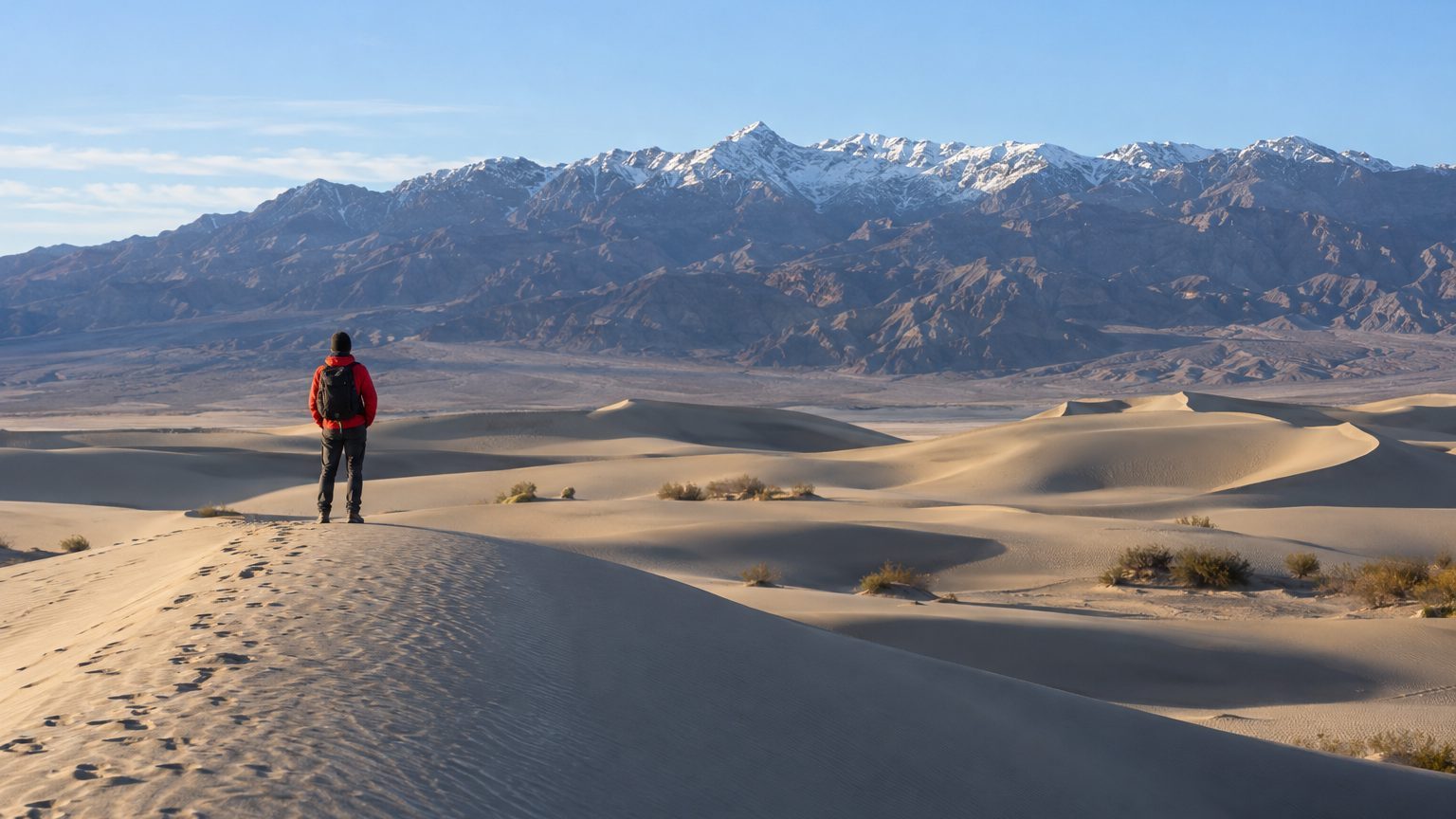
Death Valley holds the planet’s hottest recorded temperature, 134 degrees Fahrenheit on July 10, 1913. In winter it’s a different place. Average highs in December and January run from 64°F to 70°F, with lows between 40°F and 45°F. The National Park Service points out that snow caps the high peaks and low-angled light makes the season especially beautiful for exploring the valley.
Crowds follow the calendar. Peak winter visitation falls from Christmas to New Year’s, over Martin Luther King Day weekend, and over Presidents’ Day weekend. A weekday in mid-January feels like a different park.
Wildflowers are the wildcard. In late February 2026, the park service declared an above-average bloom year, after a record 2.41 inches of rainfall the previous fall. That was the best display since 2016, and the agency says a true superbloom comes about once a decade. Don’t plan a trip around another one. Even in normal years, smaller pockets of flowers can appear on the desert floor in early spring, so check the park’s bloom updates before you book.
Joshua Tree plays by different rules. Unlike Palm Springs, it can get pretty chilly at night, since it sits in the high desert above 2,700 feet. Desert campsites see cold nights of 20 to 35°F, so a 20°F sleeping bag and layers earn their space in the car. An occasional storm can even turn the park into a striking desert snowscape.
The coast: whales, butterflies and quiet beaches
Gray whales make one of the longest migrations of any mammal, and they pass California in winter. They travel from feeding grounds in Alaskan waters to calving lagoons in Baja California and back. The migration runs roughly December through April and peaks from January to March.
You have plenty of places to watch. San Diego, Santa Barbara and Monterey all run boat tours, and the whales are also often visible from several shoreline spots near Mendocino. The Channel Islands are another option, though boat schedules depend on the weather. A rough-sea cancellation can wreck a tight itinerary.
Thousands of monarch butterflies winter in Pacific Grove.
San Diego suits families who want mild weather and a holiday atmosphere. Legoland California and SeaWorld both put on holiday decorations and special events in December, and nearby Coronado Island offers beach time. Santa Barbara works better for couples. More clouds and moisture in the air make its winter sunsets especially vivid, and the whale-watching season there coincides with them.
Matching the place to the trip
Start with how many days you have. Over a long weekend, Big Bear, Palm Springs and San Diego keep the driving short. Four days or more opens up Tahoe, Mammoth and Death Valley, where the drive alone can eat a full day.
Then think about who is coming. Skiers and snowboarders should look north and east, to Tahoe and Mammoth. Families with small children usually do better at Big Bear or Mount Shasta, where snow play is easy and the terrain is gentler. Hikers who hate crowds should aim for Joshua Tree or Death Valley on a weekday. Yosemite also stays open in winter, and hikers can usually still explore the valley on foot, even in the snow. Whale-watchers need only a coastline and a free January.
Book early for the holiday stretch. A trip planned in October for the week between Christmas and New Year’s has far more options than one planned in December, and the same is true of the January and February holiday weekends. Weather will still do what it likes, so leave a buffer day on any mountain or boat trip.
One last tip for Mammoth. Hot springs there, such as Wild Willy’s, are a local favorite, but snow makes some of them trickier to reach. Ask at a local shop about current access before you drive out for a soak.
Sources : travelandtourworld.com | nps.gov