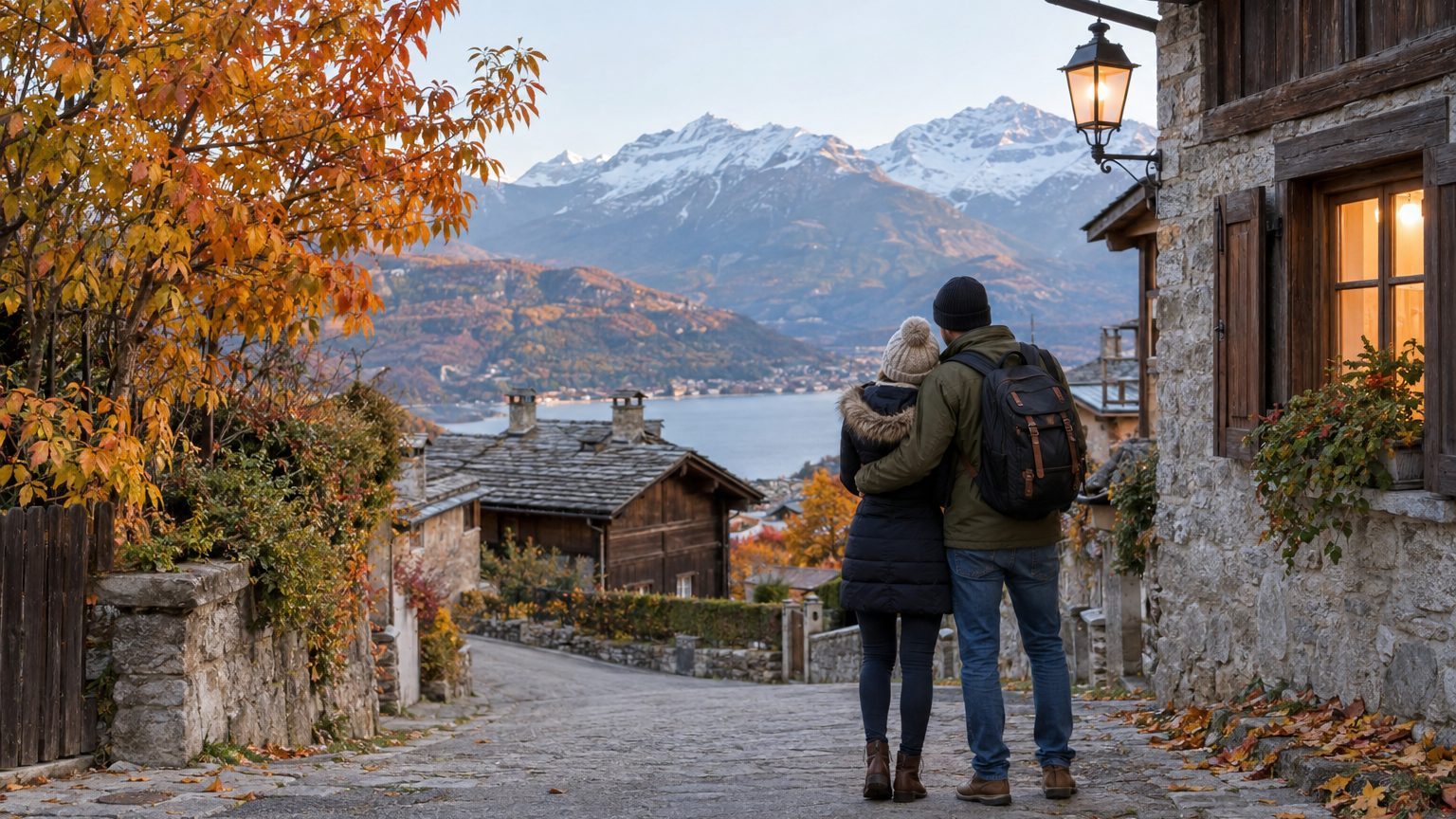
The best winter Getaways for Couples begin with a question most people skip. What do the two of you want to be doing at 7 p.m. on a Saturday? Sitting by a fireplace, soaking in a hot spring, or watching a sunset over open water? Answer that first, and the destination mostly picks itself.
Most trips for two fall into three camps: snow, sun, city.
- Mountain towns like Aspen and Telluride pair skiing with fireplaces and spas.
- Mount Rainier requires tire chains on all vehicles from November 1 to May 1.
- Many car rental contracts forbid installing tire chains.
Snow country: fireplaces, slopes and a plan for the road
Mountain towns dominate the romantic-winter conversation, and for good reason. A winter weekend in Aspen can mean skiing by day, champagne by the fireplace at night and spa treatments. Telluride, Park City and Sun Valley all trade on the same formula, and Lake Tahoe offers winter drama without overwhelming resort vibes. Skiing is optional, too. Colorado’s Front Range offers horse-drawn sleigh rides, stargazing and a soak at Indian Hot Springs, just west of Denver.
Snow has a catch, and it sits on the highway. At Mount Rainier National Park, all vehicles must carry tire chains from November 1 to May 1, and that includes four-wheel drive, regardless of tire type or weather.
Colorado applies a similar logic statewide. Its traction law covers mountain roads above 9,000 feet and designated corridors from September 1 through May 31, and I-70 between Denver and Glenwood Springs sees dozens of multi-hour closures per winter, mostly November through March. California runs a tiered system in which the top tier, R3, means chains are mandatory on all vehicles regardless of drive type.
Read your rental contract before you book.
Many agreements forbid chains outright, a detail the National Park Service flags for Sequoia and Kings Canyon visitors: many car rental contracts do not allow installation of tire chains or cables. Washington’s transportation officials add a humbling data point. Heavy snow is not usually what closes a pass. Wrecks caused by overconfident or unprepared drivers usually do. Practice putting the chains on in your driveway, fill the tank, and stash water, blankets and a flashlight. Tow trucks generally don’t enter the parks during active winter storms, so help may be a long way off.
Sun and mild weather: skipping the cold altogether
Not every couple wants to scrape a windshield at dawn. Sedona in winter brings cool temperatures, glowing red rock sunsets and photogenic landscapes, along with scenic hikes without summer heat. Charleston works for a different mood: winter temperatures are mild, which suits walking tours and waterfront sunsets.
The Atlantic coast has its own off-season appeal. Myrtle Beach is a budget-friendly pick, with quiet beaches, oceanfront strolls and off-season resort deals. Cape Cod offers quiet beaches, historic inns and cozy waterfront dining, an easy drive from Boston or New York. Bundle up, walk an empty shoreline, and the hotel bill looks very different from July’s.
Farther afield, Hawaii adds a seasonal bonus. Humpback whales migrate past the islands in winter and can come close to shore, which turns a beach morning into a wildlife outing. The Seychelles go further still. They require longer flights than the Caribbean or Costa Rica, which is why they stay less busy in peak winter sun.
A four-day trip with an 11-hour flight is really a two-day trip.
City breaks and small towns: romance without the logistics
Short on time? Go small and go close. East Coast couples can reach the Hudson Valley within 90 minutes of Manhattan, with historic estates, farm-to-table dining and cultural institutions. No airport, no chains, no altitude headache.
Small towns in the South and Midwest lean on winter lights. Pigeon Forge, Tennessee, holds Winterfest, with light displays, live music and a spin on the Great Smoky Mountain Wheel. Branson, Missouri, is filled with sparkling lights and charming shops. And Banner Elk, North Carolina, offers snug inns, snowy streets and intimate restaurants. These towns suit couples who want atmosphere more than adrenaline, and they tend to cost less than a ski-resort weekend.
Choosing between them
Three variables settle most debates: how many days you have, how far you are willing to travel, and how active each of you wants to be. A long weekend points to a drive of a few hours. A full week justifies a flight and a bigger swing, whether that means a ski valley or a resort on the water.
Weather deserves a place in the plan whatever you choose. If the National Weather Service issues a Winter Storm Watch along your route, it is worth adjusting your departure date or route rather than driving through. Flexible cancellation terms on the hotel make that decision painless.
One last detail for the ski-averse: even in Aspen, the après-ski atmosphere is part of the draw, and it comes without a lift ticket.
Sources : drivingclear.com | nps.gov