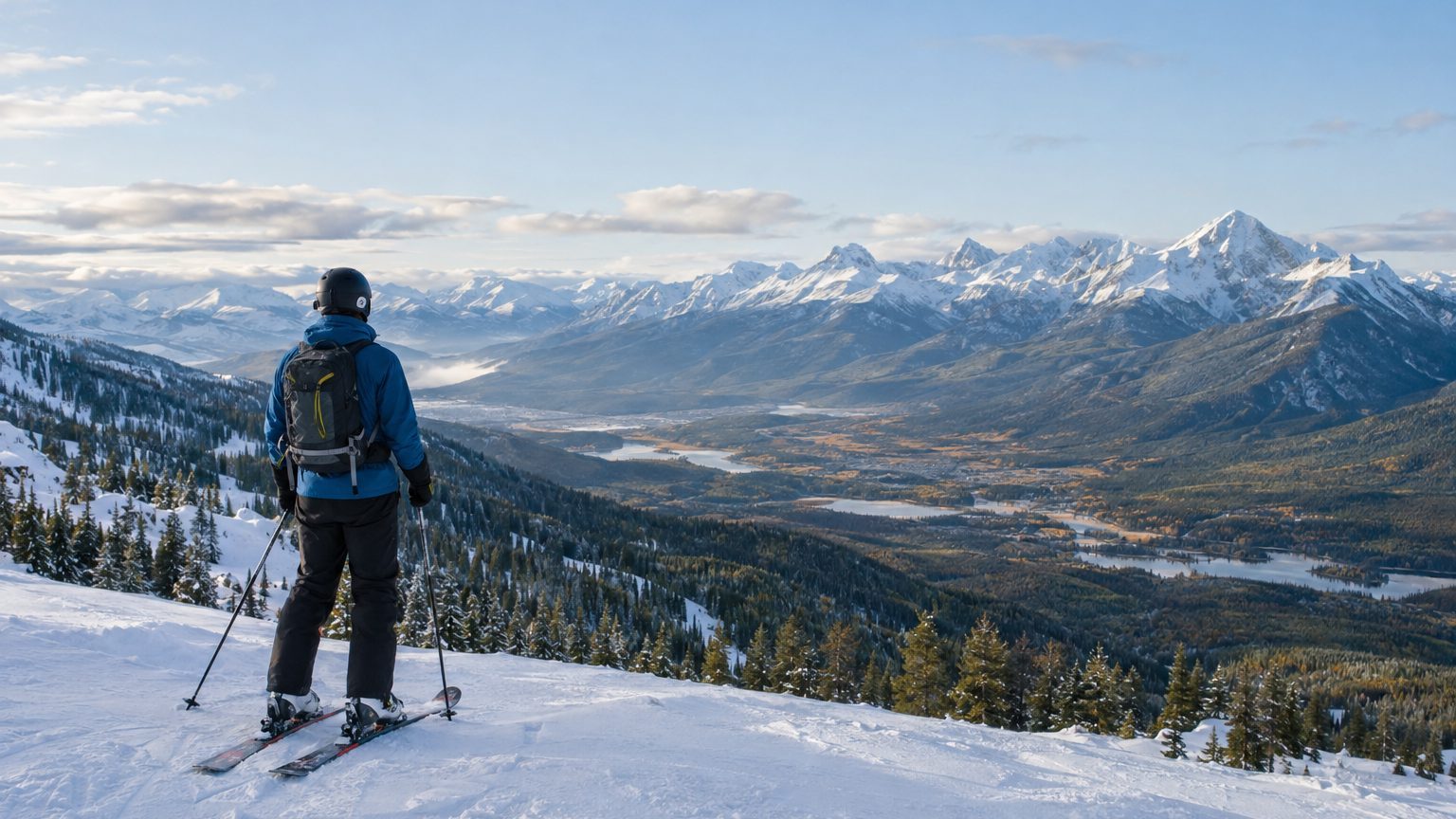
Montana has somewhere between 16 and 18 ski areas, and only a few of them sit next to a town worth a weekend. Montana has 18 ski resorts, from Big Sky, the largest in North America by acreage, to community T-bars with $25 lift tickets and zero crowds. For most first-time visitors, the real choice among ski towns in Montana comes down to three: Big Sky, Whitefish and Bozeman. They have very little in common, so pick by the trip you want, not by the trail map.
Big Sky: the biggest terrain, the most engineered village
Big Sky features more than 5,800 acres of terrain and a 4,300 foot vertical drop. The resort is about 45 miles from Bozeman Yellowstone International Airport, roughly a one-hour drive. The base village sits at about 6,300 feet, which helps keep the snow cold and dry.
Here is the catch. Big Sky’s Mountain Village exists because of the ski resort, and it reads that way: lodging, restaurants and lifts arranged for convenience rather than grown over a century.
For some travelers, that is the appeal. You can ski out, eat, and be in bed without ever starting a car.
This winter is the first full season for the Explorer Gondola. It opened December 20, 2025, and Big Sky bills it as the world’s fastest 10-person gondola. Opening day is Wednesday, November 25, 2026, and daily operations end Sunday, April 11, 2027. Two bonus weekends follow, April 16–18 and April 23–25, Friday through Sunday, conditions permitting. That makes Big Sky one of the few places in the northern Rockies where spring skiing is a planned event and not a lucky accident.
Whitefish: a real town with a mountain attached
Whitefish feels like a town that existed long before the lifts.
The resort sits on Big Mountain, near Glacier National Park. It offers more than 3,000 acres and over 2,000 feet of vertical. On clear days, the summit view takes in Glacier National Park and Whitefish Lake. The downtown has the bars, restaurants and brick storefronts that Big Sky’s village is still trying to grow.
Getting there is easier than the map suggests. The town is only 7 miles from the base area, regularly scheduled passenger trains serve Whitefish, and Glacier Park International Airport is about 30 minutes away. Skiers coming from the Midwest or Pacific Northwest can skip the rental car entirely if they plan around the train and the resort shuttle.
Dates and money matter here. Opening day is Friday, December 4, 2026, and closing day is Sunday, April 4, 2027, conditions permitting. An adult season pass costs $1,199 through November 15, 2026, then rises to $1,570. Locals planning more than a dozen days should act this week.
Bozeman and Red Lodge: the lower-key options
Bozeman is a college town first and a ski town second, which turns out to be an advantage. Bridger Bowl is about 12 miles from town, and it has more than 2,000 skiable acres and 2,700 feet of vertical. It is popular with locals and college students, with a laid-back atmosphere to match. Big Sky is an hour away, so one home base covers two very different mountains.
Bridger has no slopeside lodging, which pushes visitors into town. Winter is the off-season in the Yellowstone area, so there should be good lodging bargains in Bozeman. Bridger’s opening date has been listed anywhere from December 11 to December 18, so check before booking a December trip.
Red Lodge is the pick for a quieter weekend. It is the easternmost ski area in Montana, sits on the edge of the Beartooth Mountains, and draws mostly from Billings, about an hour away. Projected opening is late November or early December.
Smaller hills reward a detour, too. Great Divide, near Helena, has long been known for Friday night skiing at a price that once hovered around $15, though check current rates.
Matching the town to the trip
Timing shapes the experience as much as the town does. Montana’s ski season generally runs from late November to mid-April, though conditions peak from February to early March, with powdery snow and fewer crowds. Early-season skiing usually means limited terrain, firm snow and plenty of company on whatever run is open. A Thanksgiving week trip to Big Sky is about the holiday more than the snow.
Snow is rarely the problem later. Most major resorts, including Whitefish, Big Sky and Bridger Bowl, receive 300 or more inches annually. Montana’s climate is cold and dry, which protects snow quality throughout the season.
Book early, but only where it counts. Lodging at Big Sky and Whitefish should be reserved two to three months ahead for peak weeks, while the other 16 areas rarely require advance planning.
A rough shortcut helps. Choose Big Sky for terrain and convenience, Whitefish for a walkable town and train access, and Bozeman for lower lodging costs and the option to ski two mountains. Red Lodge suits a short, quiet trip.
One last practical note: Big Sky Resort says you save the most when you book lift tickets in advance. For a weekend trip, that single step can change the cost of the whole getaway.
Sources : onthesnow.com | tetongravity.com