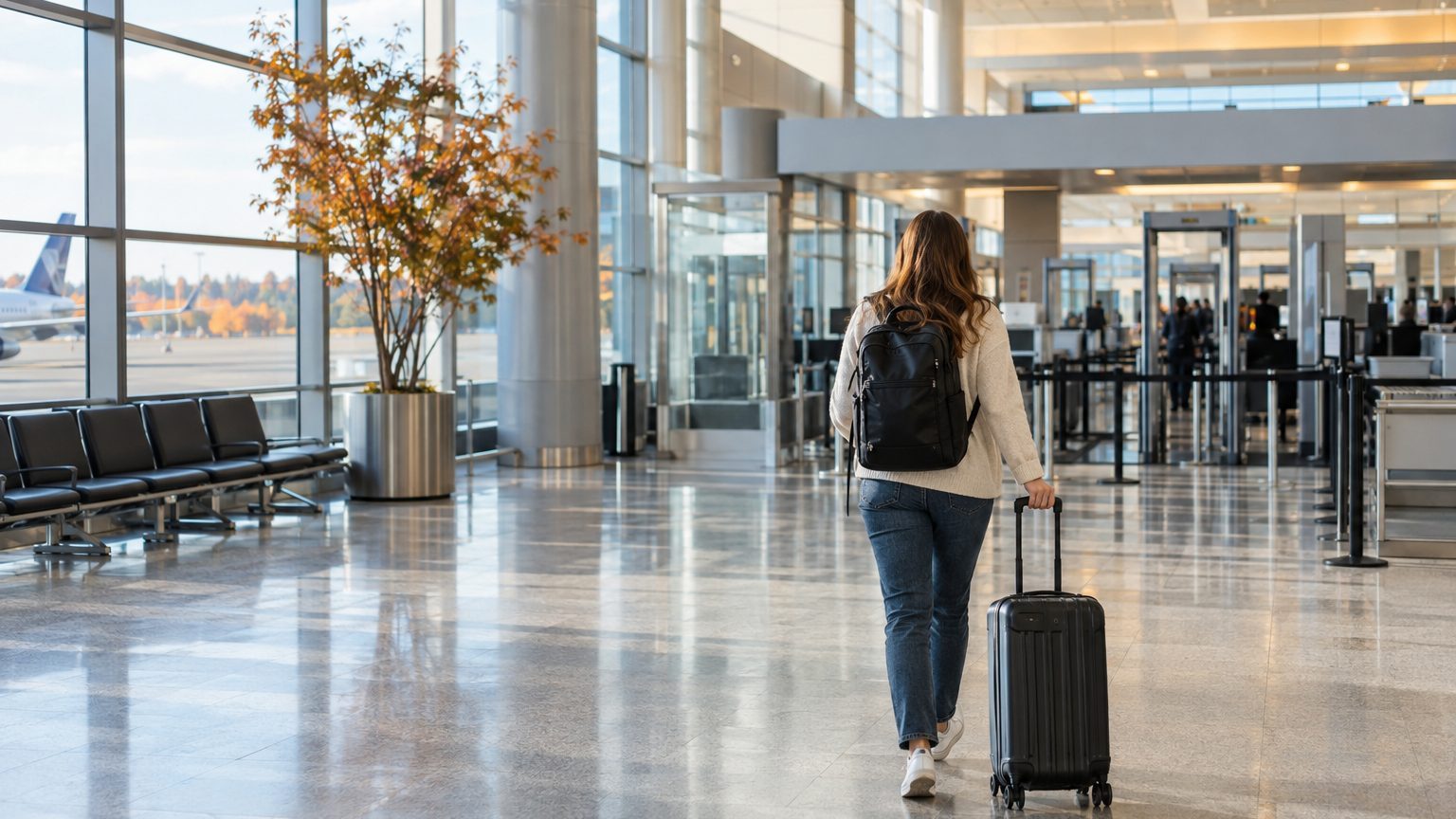
The agency said early indicators point to more than 3 million people screened nationwide on Sunday, November 29. The record is 3,133,924 screenings on the Sunday after Thanksgiving in 2025. For most flyers the working rule is two hours before a domestic flight and three before an international one, with 30 to 60 minutes added at large airports on the four peak days.
Two hours is the floor, and the peak days push it higher
TSA’s standing advice is to reach the airport at least two hours before a domestic departure and three hours before an international one. Its Thanksgiving guidance adds that the clock should cover parking, airline check-in, bag drop and the checkpoint, not just security. A regional TSA spokesperson in Seattle put it as two hours from the moment you walk into the terminal, which is a different thing from two hours from the moment you leave home.
The calendar matters as much as the airport. TSA’s regional spokespeople name the Tuesday and Wednesday before Thanksgiving, and the Sunday and Monday after, as the heaviest days, with Sunday the worst. Thanksgiving Day is the opposite. TSA counted 1,559,165 people on Thanksgiving Day 2025, about half the Sunday total, so a flight that morning will probably feel generous against the standard two hours.
Time of day shifts the numbers too. In an ordinary eight-week stretch ending October 17, the busiest checkpoint hour nationally ran from 5 a.m. to 6 a.m., with about 179,500 people screened, and 54% of daily screening happened before noon. Those are normal-week counts, and Thanksgiving week runs heavier. The Seattle spokesperson described a morning rush from 5 a.m. to 8 a.m. and a second one in the afternoon. A 6 a.m. flight therefore means standing in the line that everyone else with a 6 a.m. flight is standing in.
Big hubs, mid-size airports and regional fields need different cushions
At the largest airports, build in more than the baseline. Hartsfield-Jackson Atlanta asked Thanksgiving 2025 travelers to arrive 2.5 hours ahead of domestic flights and three hours ahead of international ones. Atlanta also put up 18 information displays before security showing expected waits. Las Vegas is a useful stress case this year. TSA there expects more than 91,000 passengers between 4 a.m. and noon on a peak Sunday, and the airport faces an extra surge on Sunday, November 22, after the Formula One race weekend. At hubs like these, plan on 2.5 to 3 hours for a domestic trip on November 24, 25, 29 and 30. Add time if you are returning a rental car.
Mid-size airports sit between the extremes. Pittsburgh International is a good example. TSA estimated about 15,000 passengers on the Tuesday and Wednesday before Thanksgiving in 2025, and about 18,000 on the Sunday after. That volume spreads across a handful of checkpoint lanes without the multi-terminal shuttles of a hub. Two hours holds on a normal day, and 2.5 hours is a sensible cushion on the four peak days. Pittsburgh’s TSA spokesperson stressed that parking, rental returns and bag check are the steps people forget to count.
Small regional airports are the one place where the national advice is usually enough. They have one checkpoint and short walks, and on Thanksgiving Day the two-hour guidance usually leaves slack. The risk there is different. Fewer staff are on duty, and a single slow screening of a family with food and strollers can hold up the whole lane. If your airport has only a handful of morning departures, arrive when TSA’s two-hour guidance says to and use the spare time at the gate. Airlines set their own bag-drop cutoffs, which appear in your booking confirmation, and a missed cutoff cannot be fixed at the checkpoint.
Families should plan for extra time at any size of airport. TSA says travelers with children may want to arrive earlier than the baseline, because strollers, car seats and snacks all add time at screening.
Sorting out ID, bags and pies before you leave saves more time than rushing
The easiest delays to avoid involve identification. TSA requires a REAL ID-compliant license or another accepted form of ID, such as a passport, an enhanced driver’s license or a military ID. Anyone who has not finished the REAL ID process can be pulled out of line at the checkpoint to sort it out, which adds time. Check your wallet a few days before the flight rather than at the curb.
PreCheck members have a newer option. TSA PreCheck Touchless ID, a facial-recognition lane that skips the physical ID and boarding pass check, is available at participating airports, including Pittsburgh this Thanksgiving. Travelers have to opt in ahead of time through their airline profile, upload a passport photo and attach their Known Traveler Number. You cannot sign up at the airport, and an indicator on the boarding pass tells officers you are eligible. In regular PreCheck lanes, PreCheck also means laptops and compliant liquids can stay in the bag.
Food is the other familiar delay. Solid items such as pies are allowed in a carry-on, but gravy, cranberry sauce and other spreadable or pourable foods count as liquids and fall under the 3.4-ounce limit in a carry-on. Packing those in checked luggage, or shipping them, keeps the bag from being pulled for a manual search. TSA will answer questions by text: send the word TRAVEL to 275-872, which spells ASK-TSA, for live support before you leave home and up to the checkpoint.
Two more habits help. The free MyTSA app shows estimated security wait times, and some airports let you choose among checkpoints. At Seattle-Tacoma all checkpoints reach all gates, so you can walk to the shortest line. Finally, check your flight status before you leave for the airport. Snow in Chicago the day before the 2025 record Sunday led to almost 300 cancellations at O’Hare, and airline apps often show rebooking options before the counter lines form.
If the schedule is flexible, moving a trip off the peak days does more than any arrival-time trick. The quietest pre-holiday days are Saturday, November 21 and Monday, November 23, and on the return side, Tuesday, December 1 and Wednesday, December 2 are the lightest.
Sources : tsa.gov | otta.travel | travel.yahoo.com