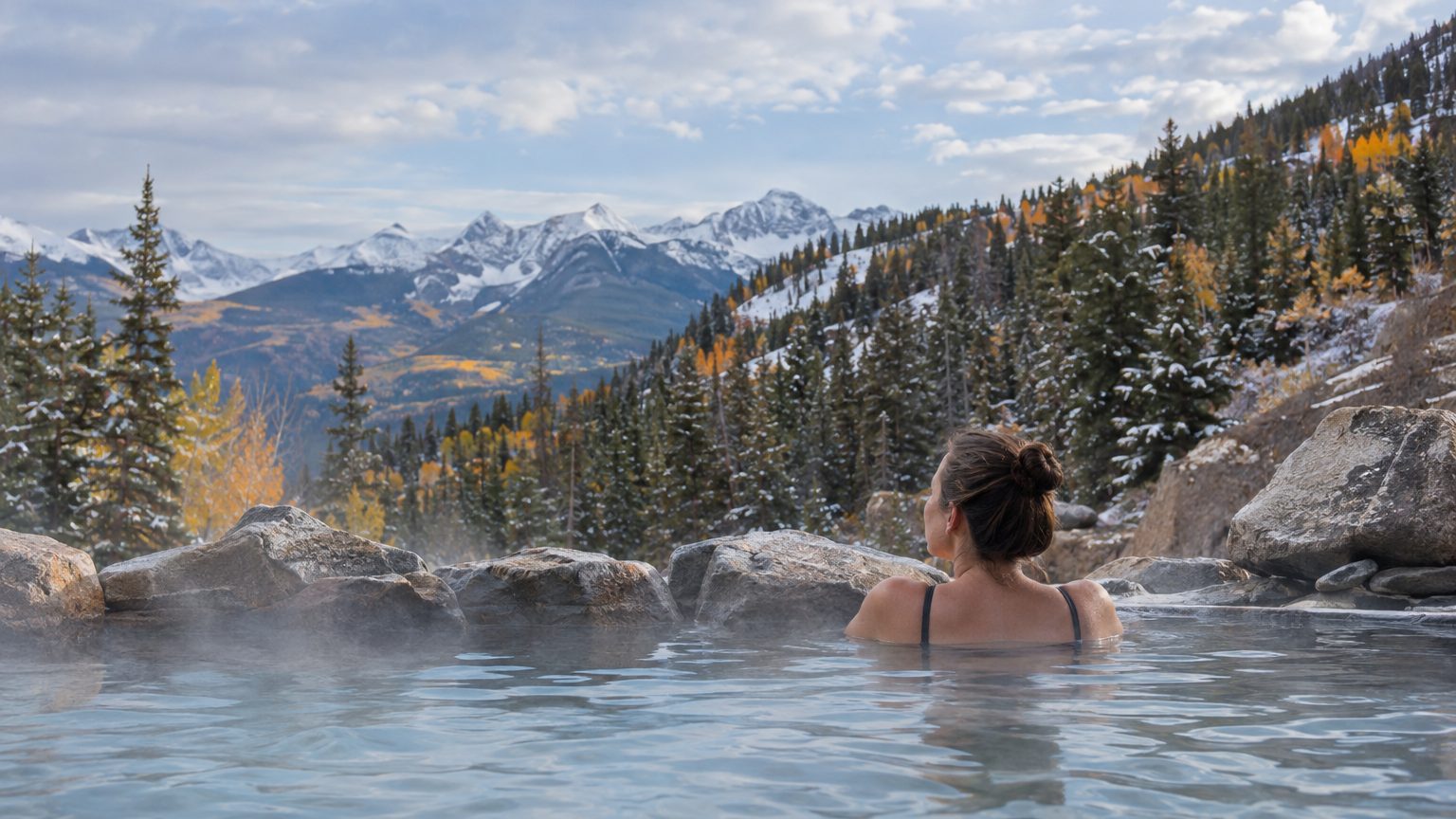
Snow on the pine boughs, air in the 30s, and water at 100 degrees or better. That is the whole pitch for hot springs Colorado travelers chase from December through March, and it works. Directories list anywhere from about 50 to nearly 70 springs statewide, from free, clothing-optional wild soaks to polished resort decks.
Choosing one is the hard part.
A family with kids and a couple chasing quiet need different places, and a ski trip changes the math again. Some springs sit a short walk from a downtown hotel. Others require a snowy drive up a mountain road in a vehicle with the right tires. Here is how to sort them before you book a room.
Match the spring to the trip you actually want
Glenwood Springs is the easiest first-timer pick. It sits at the crossroads of Interstate 70 and Highway 82, and Glenwood Hot Springs Resort is home to the world’s largest hot springs pool. Families gravitate there. Across town, Iron Mountain Hot Springs works better for adults, with pools laid out along the Colorado River. Counts vary from the high 20s to the low 30s depending on who is tallying, and you can watch ice blocks drift down the river from the water.
Yampah Spa & Vapor Caves, also in town, is a different animal. You descend a stairway into steamy underground chambers where temperatures run 110 to 112 degrees and sessions top out around 15 minutes. Reservations are required unless your lodging bundles it in.
Pagosa Springs leans into winter harder than almost anywhere. The Springs Resort is fed by the Mother Spring, the world’s deepest geothermal hot spring. That source runs around 130 degrees, far too hot to swim in, so the resort blends it into a series of pools. Temperatures across them run from 45 to 115 degrees, which means you can hop from a plunge to a deep soak without leaving the property.
Steamboat Springs offers two moods. Old Town Hot Springs is the splashy one, part water park with two 230-foot slides, and it sits near downtown. Strawberry Park is the opposite: sandstone pools along Hot Springs Creek with a pine forest backdrop, plus rustic cabins. Pools there run roughly 101 to 106 degrees, and the place turns clothing-optional after dark.
Closer to Denver, Mount Princeton Hot Springs Resort near Buena Vista is about 2.5 hours from the city. It has a 105-degree soaking pool and creekside pools where Chalk Creek’s cold water lets you dial the temperature. For a ski-day finish near Winter Park, Hot Sulphur Springs Resort offers pools and tubs from 98 to 112 degrees.
Ouray deserves a mention for night owls. Twin Peaks Lodge & Hot Springs keeps its springs open 24 hours for hotel guests, so a midnight soak under mountain stars is possible without a drive.
Roads, reservations and the details that make or break the weekend
Winter is peak season, so book early. Strawberry Park’s evening sessions and most resort stays typically require booking in advance. At Desert Reef near Florence, a clothing-optional spot, weekends and holidays book out, while a weekday pass runs about $25. Midweek trips save money and crowds at the same time.
Roads matter more than the water.
Getting to Strawberry Park is itself a winter adventure: snow tires or a 4WD vehicle are required, or you can take a shuttle from downtown Steamboat. Rental cars from the airport don’t always qualify. Check the vehicle’s tires and drivetrain before you commit, and pack a scraper and extra layers. Interstate 70 can slow to a crawl on powder Saturdays, so Glenwood-bound travelers from Denver should leave early or plan to arrive midweek.
Not everything is open all season. The Springs Resort, Durango Hot Springs Resort + Spa, Iron Mountain and Old Town all operate through the winter. Smaller, rural springs follow their own calendars. Valley View, for instance, has historically closed for most of December before reopening for New Year’s, so confirm hours directly instead of trusting a listing.
Resist the urge to cram. The Colorado Historic Hot Springs Loop spans 800 miles and eight destinations, including Carbondale, Ouray, Pagosa Springs and Durango. That is a week-long project, not a weekend. Pick one base town, soak twice a day, and let the mountains do the rest. Glenwood and Steamboat both offer enough non-soaking entertainment to fill a few days, from ski areas to cozy downtown cafes.
Soaking smart when the air is below freezing
Heat is the point, but it deserves respect. Natural springs can exceed 140°F at the source, which is why developed resorts blend and cool their water before it reaches the pools. In wild settings, test the water with your hand before stepping in, and never assume a pool is safe because someone else is sitting in it.
The strangest part of a winter soak is the exit. Wet skin meets 25-degree air, and the walk to the locker room feels longer than it did in July. Bring a hat (yes, in the pool, since wet hair freezes), sandals with grip, a thick robe or towel poncho, and a plastic bag for your wet suit. Drink water between sessions. Soaking dehydrates you faster than you would guess, and altitude adds to the effect.
If you want the free-and-rustic version, Penny Hot Springs on the Crystal River near Redstone is a free, natural pool, but expect no changing rooms and icy approaches. The most remote option, Conundrum Hot Springs, sits at 11,200 feet in the Maroon Bells Wilderness. In deep winter, that is a backcountry mission requiring avalanche awareness, not a casual weekend plan.
Pair soaks with something active. A morning on skis or snowshoes at Sunlight Mountain or Purgatory, followed by an evening in the pools, is the classic Colorado winter pairing, and sore quads respond well to 104 degrees.
The combination is not new. Hot Sulphur Springs held its first winter carnival on December 31, 1911, which makes your après-ski soak a very old Colorado tradition.
Sources : cohotspringsloop.com | denvergazette.com