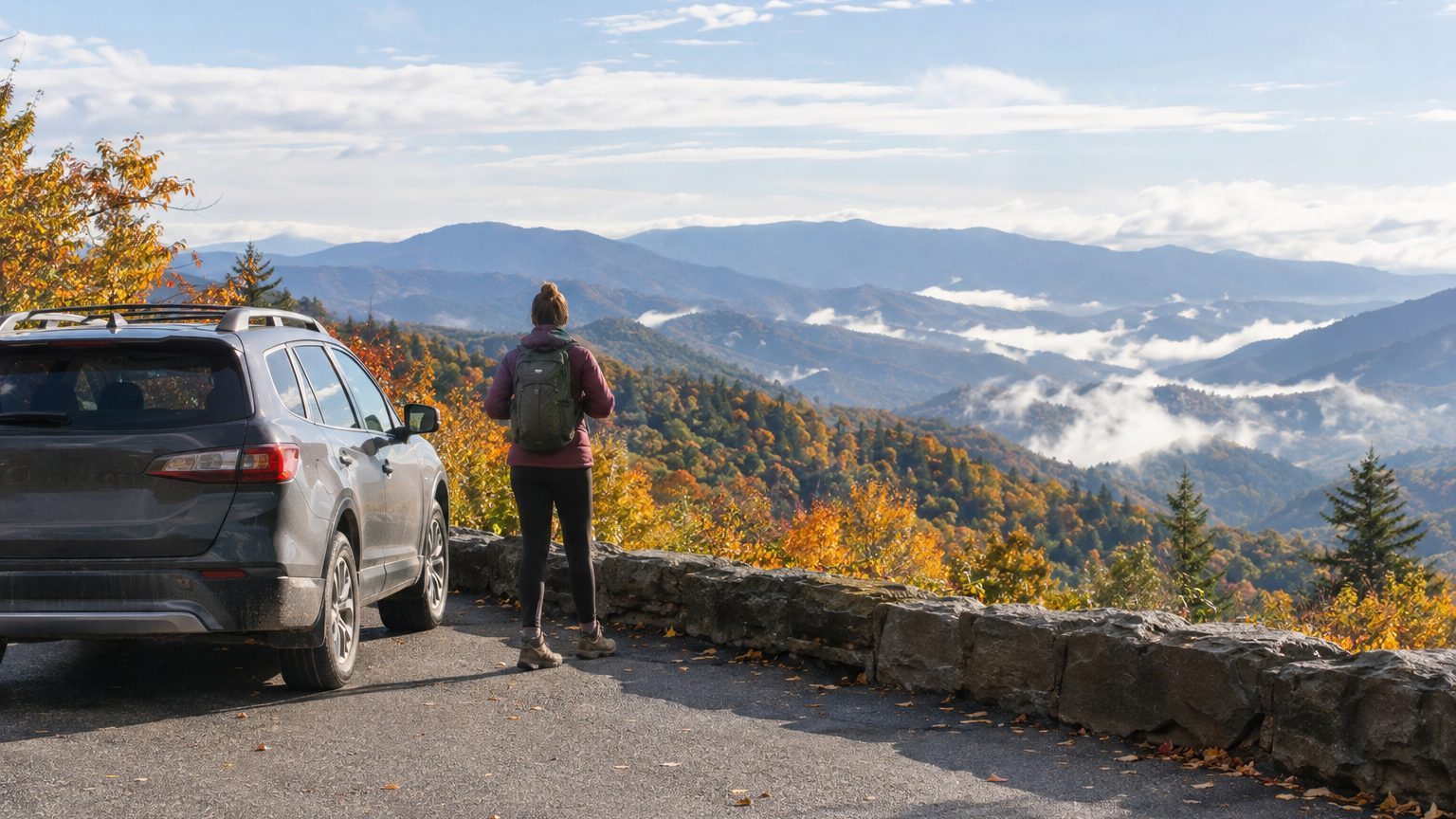
Great Smoky Mountains National Park does not charge an entrance fee. Park the car for more than 15 minutes, though, and you’ll owe $5, $15 or $40, depending on the tag you pick.
The rule covers any vehicle parked longer than 15 minutes inside the park.
What the tag costs and what it covers
Three tag lengths exist for every vehicle size and type: $5 for a day, $15 for a week, $40 for a year. Motorcycles, UTVs and RVs pay the same rates as a minivan. Each tag is matched to a single vehicle and must carry its license plate number.
The fine print matters here. Tags can’t be moved from one vehicle to another. A two-car family needs two tags. Having a tag also doesn’t guarantee a spot at any particular lot, so think of it as a permit to circle the lot, not a reserved seat.
The annual tag is worth a quick calculation. At $5 a day, the $40 version pays for itself on your eighth day of parking. Three separate $15 weekly tags would run $45, which means a family that visits the Smokies a few times a year, say for a fall color trip, a spring wildflower weekend and a summer cabin week, comes out ahead with the annual option.
Your America the Beautiful pass won’t substitute for the tag, and it earns no discount.
Who needs one, and who doesn’t
Drivers who simply pass through are in the clear. Visitors who just drive through the park don’t need a tag. Roll across Newfound Gap Road, pull over for a two-minute photo, and keep going. Stop to hike Alum Cave or Rainbow Falls, and the clock changes everything.
Free days are the other loophole. The park honors the federal free entrance days, and tags aren’t required on those dates. The 2026 list included the National Park Service’s August 25 birthday and Veterans Day on November 11. The calendar is set year by year, so check the park’s fees page before you plan a trip around it. Most of those dates fall in high season anyway, when lots fill early, so a $5 saving may cost you an hour of circling.
Schools get a separate track. Regulations allow school groups and other bona fide educational institutions to obtain a waiver when the visit is for educational or scientific purposes. The request goes on NPS Form 10-1750, submitted two weeks ahead, and an approved placard arrives by email.
Renting a car means waiting until you have the plate number.
Where to buy it
Buying ahead saves time at the trailhead. Daily and weekly tags are sold online through recreation.gov, where you can specify the dates you plan to visit. The park can’t print the tag for you, so run it through a printer at home or at the hotel business center. A phone screenshot won’t do.
Annual buyers have a different route. Annual tags bought online through Great Smoky Mountains Association are shipped to your door. They must be displayed on the front, lower passenger side of the windshield. Order well before a planned trip so the decal arrives in time.
Already at the park and tagless? Automated fee machines sell daily and weekly tags by credit card, 24 hours a day, year-round. Locations include the Deep Creek parking area and the Cades Cove entrance lot. Staffed options include the Gatlinburg Welcome Center, Sugarlands, Townsend, Cades Cove, Clingmans Dome and Oconaluftee visitor centers, where all three tag types are sold. Hours vary by season, so confirm before you rely on a counter.
The crowds explain why the system exists. The park logged 11,527,939 recreation visits in 2025, roughly the population of Ohio passing through a single mountain range in a year. Gatlinburg, Cherokee and Townsend each funnel traffic toward the same handful of popular trailheads.
Where the money goes and how to park smart
All of the fee revenue stays in the Smokies. Proceeds have gone toward new parking at Laurel Falls and more ranger and safety staff. Whatever you think of paying for parking in a free park, the cash isn’t disappearing into a general federal fund. Congress authorized the fees under the Federal Lands and Recreation Enhancement Act.
The tag buys you permission, not convenience, so timing counts. The park advises busy spots like Laurel Falls Trail and Clingmans Dome be visited off-peak, midweek and in cooler months. Arriving at sunrise beats arriving at 11 a.m. on a Saturday in October, every time. Where you can, route the day around less obvious trailheads and save the famous ones for the early shift.
One last wrinkle can waste five dollars. A daily or weekly tag bought in person is validated on the date of purchase, so grabbing one at a kiosk the evening before a hike starts the clock a day early. If you want a tag for a specific morning, book it online and pick the exact date.
Sources : greatsmokies.com | visitmysmokies.com