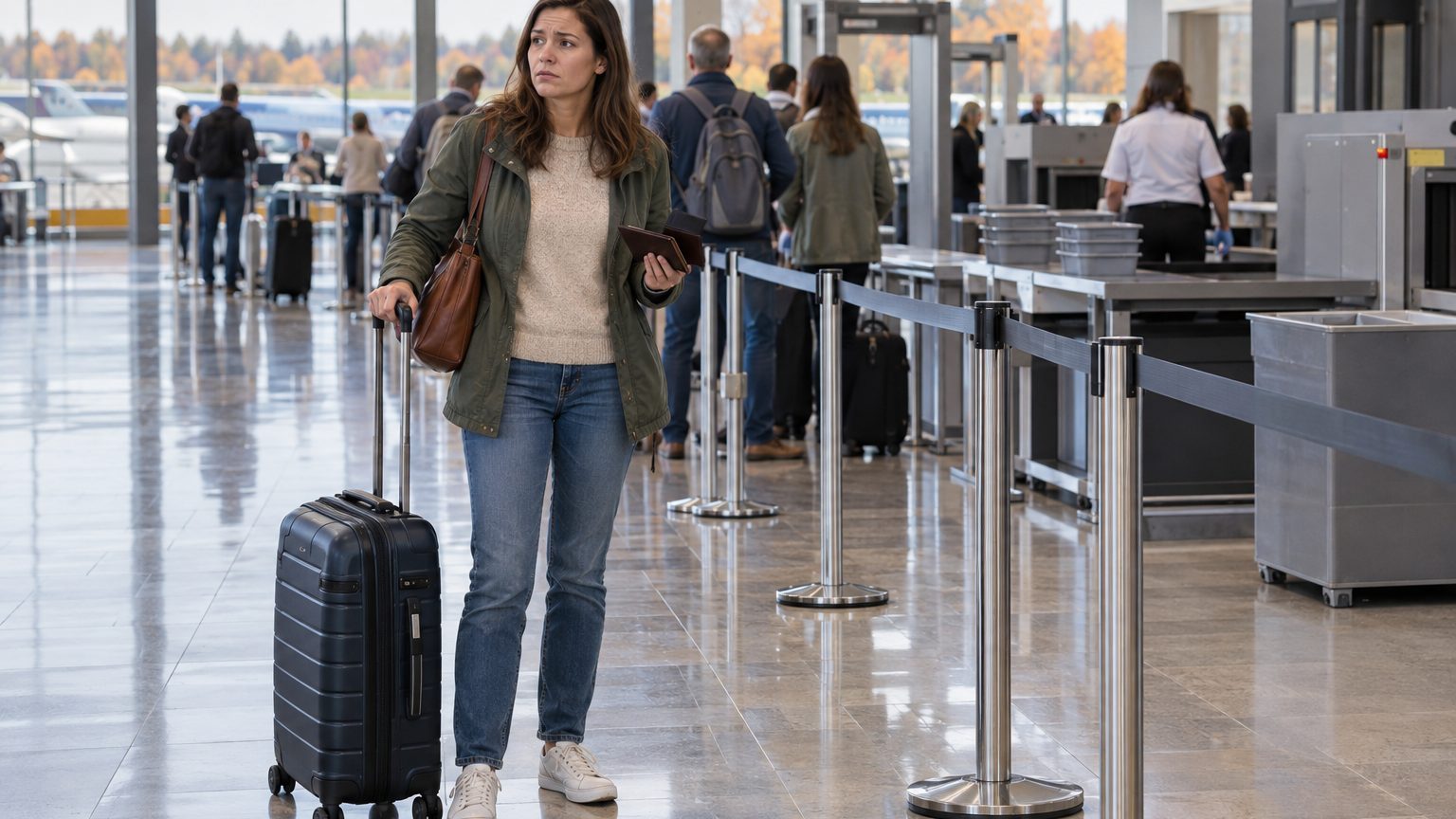
Since February 1, 2026, a standard driver’s license that isn’t REAL ID-compliant no longer gets you quietly waved toward a longer line. TSA refers travelers without an acceptable ID, including those holding a non-compliant state license, to an optional process called TSA ConfirmID. The price is $45 for a 10-day travel period.
Paying doesn’t guarantee you a seat on the plane.
The IDs that let you skip the fee entirely
A REAL ID is only one route through security. The star in the upper portion of the card marks a compliant license, but a wallet or drawer may already hold something that works just as well. A U.S. passport or passport card, DHS trusted traveler cards (Global Entry, NEXUS, SENTRI, FAST) and a state-issued Enhanced Driver’s License all clear the checkpoint without any extra step.
The list runs longer than most travelers assume. It includes Department of Defense IDs (dependents’ cards too), permanent resident cards, border crossing cards, HSPD-12 PIV cards, Employment Authorization Cards (I-766) and the Veteran Health Identification Card. Photo IDs issued by a federally recognized Tribal Nation, including Enhanced Tribal Cards, qualify as well. A foreign passport also works for visitors.
Digital options exist, with limits. TSA accepts certain mobile driver’s licenses issued by states approved for federal use. Wallet-based IDs from Apple, Google and Samsung appear on the agency’s list too, but only at select airports, so check your departure airport before leaving the paper card at home.
One trap catches people every year. A temporary paper driver’s license is not an acceptable form of identification. If you’ve just renewed and are waiting on the plastic card in the mail, a passport is your safest bet.
Check the expiration date, too.
How the $45 ConfirmID option works
Think of ConfirmID as a paid detour. You complete an online form and pay the fee, then show a printed or electronic copy of the emailed receipt to a TSA officer to begin identity verification. Screenshot the confirmation, because each adult 18 or older without an acceptable ID has to complete the process separately. A family of four with two non-compliant parents pays $90, and children under 18 are not asked for ID on domestic flights.
The 10-day window is the one piece of fine print that can save real money. The fee covers ConfirmID for 10 days from the travel date listed on the receipt. A long weekend with an outbound Friday flight and a Sunday return is covered by a single payment. A two-week trip, however, may mean paying twice.
Paying at the airport is possible but a bad idea. Passengers who arrive without having paid will find instructions at marked locations at or near the checkpoint in most airports. TSA warns that showing up without a compliant ID and an unpaid fee brings additional delays that may result in a missed flight. Doing it from your couch the night before costs the same $45 and none of the panic.
There is also a budget wrinkle for government travelers: the expense is not reimbursable for Department of War service members and civilians on official travel.
What happens at the checkpoint
Expect questions, not a pat-down alone. ConfirmID has passengers answer a series of questions about themselves to verify who they are. Everyone who uses it faces additional ID verification, screening measures and potential delays. Travel guides put the added time at roughly 15 to 30 minutes, which is a rough estimate, not a TSA promise.
If the system can’t confirm your identity, you don’t fly. Verification of identity is not guaranteed, and the fee is non-refundable. That risk is why I’d treat ConfirmID as a rescue plan for a lost license on the morning of a flight, not a strategy.
Arrival times matter more than usual. Build in at least an extra hour beyond your normal buffer if you’re going the ConfirmID route, and more at a big hub during a holiday week. A regional airport with two lanes can feel the squeeze from a single slow verification, since officers are pulled from the same small pool.
Most travelers won’t face any of this. Early data show 95 to 99 percent of travelers present a REAL ID or another acceptable form of identification. The remaining few percent are the ones whose faces you notice stuck at the podium, phone in hand, trying to pay on weak airport Wi-Fi.
Your airline probably won’t care. Carriers generally want only a boarding pass, while ID checks belong to TSA, so the problem surfaces at security, not at the gate. That also means a fix is possible as late as the checkpoint, though not a comfortable one.
Skipping the fee before your next trip
The cleanest fix is an appointment. TSA encourages travelers without a REAL ID to make an appointment with their state’s DMV and get one before they next fly. Many states now offer online scheduling, and waits for a slot can stretch weeks in busy metro areas, so don’t leave it for the week before a trip. Not sure whether your card qualifies? Check with your state’s Department of Motor Vehicles.
A passport is the other answer. It costs more than a $45 one-off fee, but it works for decades-long stretches of travel, covers international trips and never needs a DMV visit. If you’re already planning a trip abroad in the next year or two, the passport may be the cheaper path overall.
One last nuance for holiday flyers: a ConfirmID receipt is tied to the travel date printed on it, so if your plans shift by more than a few days, double-check that the window still covers your return flight Before You Leave for the airport.
Sources : travel.dod.mil | kstp.com