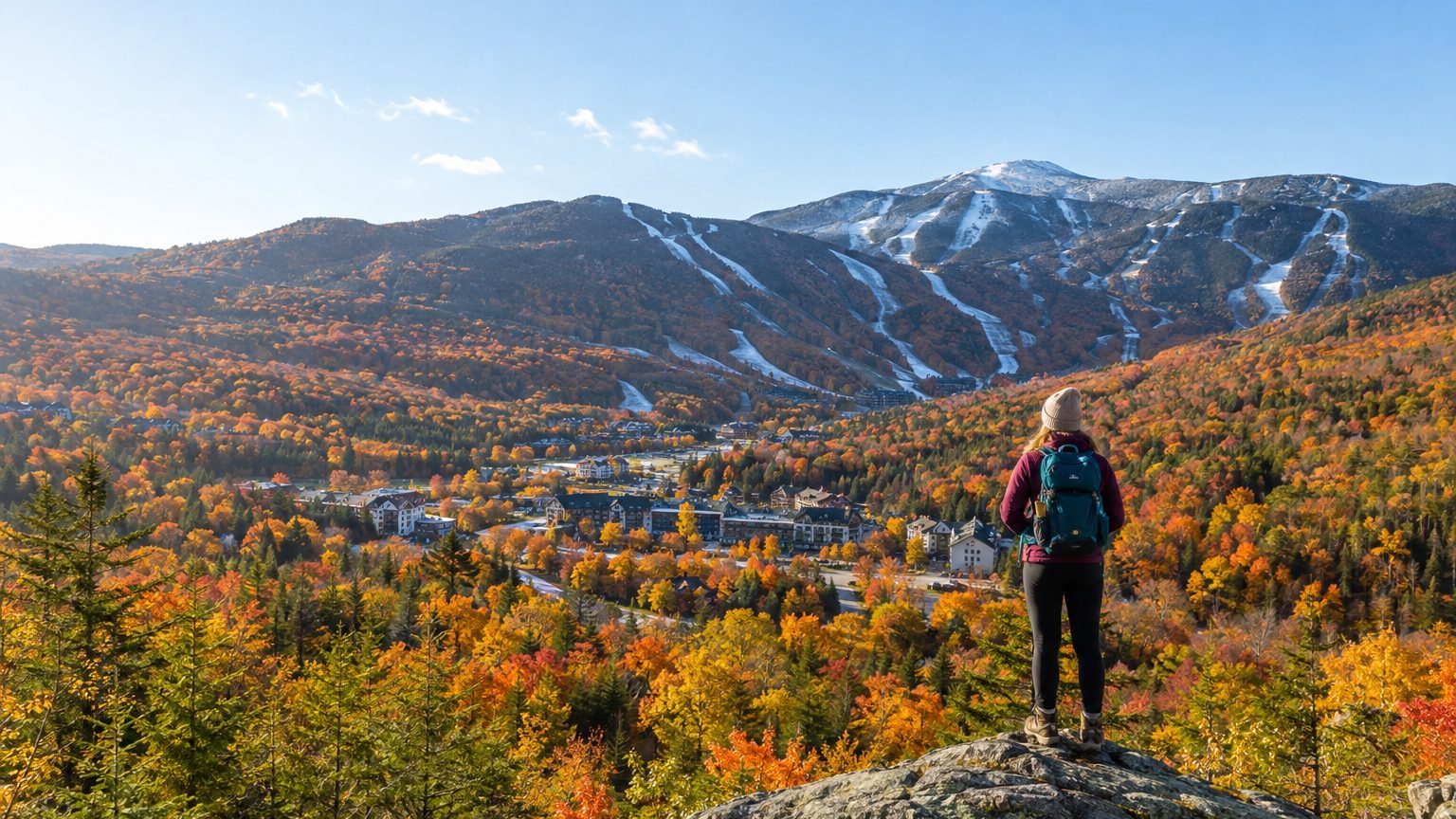
Vermont, New Hampshire, Maine, and New York still produce real winter, and that’s why the best ski towns on the east coast are worth planning around, not just the mountains themselves.
Out here, the “right” pick isn’t about chasing the tallest peak on a trail map. It’s about what happens after the lifts stop: whether dinner is walkable, whether your group can split up without a car, and whether the town has enough going on to make a three-day weekend feel longer. Snow matters, sure, but so does the shape of the place you’ll spend your evenings.
One more truth before you book: East Coast conditions change fast.
A thaw can roll through, then temperatures drop and everything sets up firm. Resorts counter with snowmaking, grooming, and glades management, but your experience still depends on timing, elevation, and exposure. If you can choose dates, aim for the heart of winter rather than shoulder season, and pay attention to temperature swings as much as snowfall totals.
What makes a ski town “best” in the East
Start with logistics, because a three-hour drive that turns into five changes the whole weekend. Many of the strongest East Coast ski towns are tied to major highways, regional airports, or Amtrak-adjacent cities, which can turn a Friday departure into a same-night arrival instead of a midnight check-in. That’s not glamour, but it’s freedom, especially for short trips.
The second filter is how the town functions without you constantly driving. Some places have a true village core, others are a string of lodges along a road, and a few are basically “stay at the resort and don’t leave.” If you want a bar crawl, look for density and sidewalks; if you want a quiet cabin week, prioritize easy grocery access and parking that doesn’t feel like a competitive sport.
Vertical drop looks great on paper, but terrain variety is what keeps mixed-ability groups happy.
East Coast resorts often shine through smart trail layout, strong tree-skiing cultures, and reliable grooming, even when conditions get firm. Snowmaking coverage is also a real differentiator here, and it’s one reason some mountains deliver consistent midwinter skiing even when natural snow is fickle. Add a solid ski school and you’ve got a place where beginners actually improve, not just survive.
Vermont: classic villages with serious terrain
Stowe is the East Coast ski postcard, but it’s not just looks. The town has a strong restaurant scene, a walkable core, and a well-developed lodging ecosystem that works for couples, families, and groups that want a bit of nightlife without going full party destination. On the mountain side, you get a mix that suits confident skiers and riders who want to push themselves, with enough intermediate cruising to keep everyone connected.
Stowe can feel crowded on prime weekends.
Killington leans bigger and louder, and that’s part of the appeal. The surrounding area has a built-for-skiers vibe, with lots of places to stay and eat, plus enough après options that you’ll notice the difference once the lifts close. The mountain footprint is huge by Eastern standards, and that scale matters when you’re trying to spread out, chase sun, or simply avoid repeating the same runs all day.
Woodstock is the sleeper move for people who want charm first and skiing close by. The town itself is storybook-pretty, the kind of place where coffee and a stroll are a legitimate morning plan, and it pairs naturally with nearby skiing without requiring you to live in a parking-lot village. It’s also a solid choice for groups with non-skiers, because the town doesn’t go dormant when someone opts out of a powder morning.
Waitsfield and the Mad River Valley take a different angle: local, independent, and intentionally not over-polished. The area is known for a strong ski culture, and it tends to attract travelers who care about terrain character and community feel more than luxury branding. If your ideal evening is a laid-back meal and early sleep to catch first chair, this valley fits like a glove.
New Hampshire and Maine: wilder edges, strong weekend energy
North Conway, New Hampshire, is a classic basecamp town, and it earns that status year after year. You’re close to multiple ski areas, the outlet-and-inn infrastructure is extensive, and you can pivot from skiing to winter hiking or scenic drives without committing to a single resort bubble. For many families coming from Boston or southern New England, that flexibility is the whole point.
Expect traffic around holiday weekends.
Lincoln and North Woodstock, New Hampshire, sit near a cluster of winter attractions, with skiing as the headliner. The area can work for a “do a little of everything” itinerary, especially if you’re traveling with kids or a group that wants tubing, easy dining, and quick access to lifts. It’s also a practical choice when you want a mountain weekend without boutique pricing attached to every decision.
Bethel, Maine, feels like a real town first, ski stop second, and that balance is rare. It’s a comfortable base for a trip where you want a quieter main street, dependable meals, and a sense that locals actually live there year-round. Pair it with nearby skiing and you get a weekend that doesn’t revolve around fighting for a dinner reservation at 7:15.
Rangeley, Maine, is for travelers who see distance as a feature, not a bug. The area is known for big nature, cold nights, and that “farther north” atmosphere that makes the air feel sharper and the stars brighter. You trade convenience for breathing room, and for some groups that trade is the whole vacation.
New York and beyond: big-name mountains, real-town perks
Lake Placid, New York, isn’t only a ski town, but it might be the most complete winter town in the region. You get a built-in Olympic legacy, a walkable village, and enough restaurants and shops to fill a long weekend even if one day turns windy or icy. Skiing nearby makes it easy to combine a mountain plan with a town plan, which is a gift when you’re traveling with different priorities.
Lake Placid stays busy for a reason.
Hunter and the Catskills, in general, work best for New Yorkers who want to ski without turning it into an expedition. The towns around the mountains have grown into a reliable weekend ecosystem: rentals, casual dining, and plenty of “leave after work, ski in the morning” energy. Conditions can be variable because of elevation and weather patterns, but for quick hits of winter, it’s a strong play.
Stratton-area Vermont deserves a mention for one specific traveler: the group that wants convenience with minimal friction. Resort-oriented villages can feel curated, but they also simplify everything, from rentals to dining to meeting up after skiing. If you’ve ever tried to coordinate eight people in three cars on icy roads, that simplicity suddenly looks like a luxury.
Some East Coast skiers treat Pennsylvania and West Virginia as a separate category, but they matter for one reason: accessibility for the Mid-Atlantic. If you’re leaving from D.C., Baltimore, or Philadelphia, a shorter drive can turn skiing from “annual trip” into “winter habit,” even if vertical and snowfall are smaller than northern New England. Frequency is an underrated performance enhancer, and your legs will notice.
How to choose your town, then book smarter
Pick your “non-ski” priority first, because it narrows the field fast. If you want nightlife, you’ll gravitate toward bigger hubs with dense lodging; if you want cozy, you’ll favor small towns where dinner is early and quiet feels normal. That decision also shapes your budget, since walkable resort villages often price convenience aggressively.
Parking can make or break a weekend.
Getting there matters as much as being there, so choose routes you can tolerate twice. For many travelers, that means aiming for towns with multiple approach options, or at least a drive that doesn’t hinge on a single mountain pass that can clog during storms. If you’re flying, think in terms of realistic winter buffers rather than “airport to lodge” fantasies, and remember that regional airports can reduce driving but also reduce backup options when weather interferes.
Build your packing around East Coast reality: temperature swings, wind, and firm snow days. Sharp edges on skis or a tuned board can be the difference between fun and frustration, and a couple of layering choices matter more than owning the most expensive jacket on the rack. The same goes for hand warmth, because cold fingers end more ski days than tired legs.
If you want a last-mile fact that changes plans, it’s this: the towns that feel best on the East Coast usually offer something you can do happily without ever clicking into bindings. A good bookstore, a brewery with decent food, a main street you can walk after dark, a scenic drive that doesn’t demand perfect weather, those are the pressure valves that keep a trip enjoyable when conditions turn. The best ski towns on the east coast aren’t only where you ski well, they’re where the rest of the weekend still works.